Shopping cart
Your cart empty!
Your cart empty!

Join 10k+ people to get notified about new posts, news and tips.
Do not worry we don't spam!
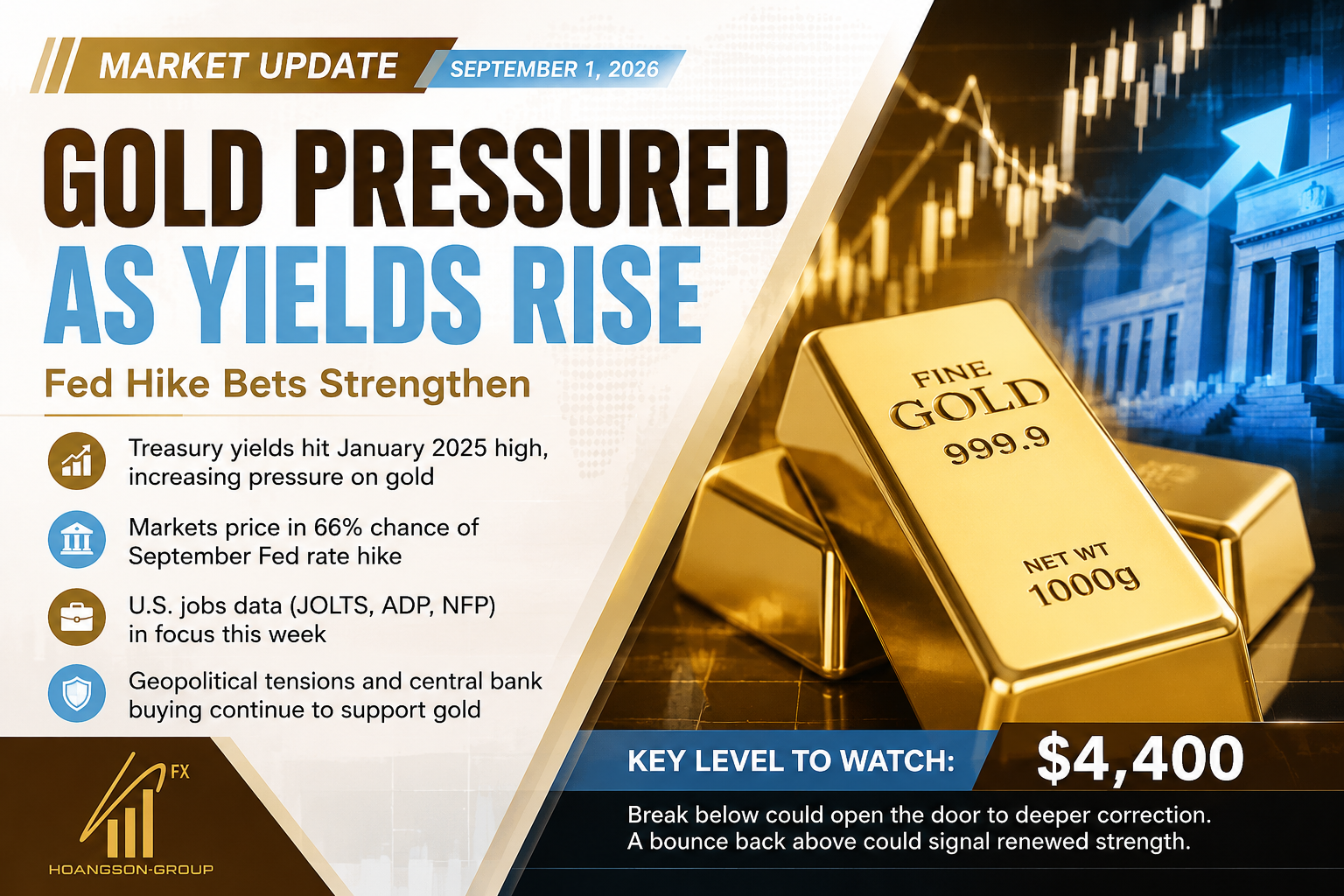
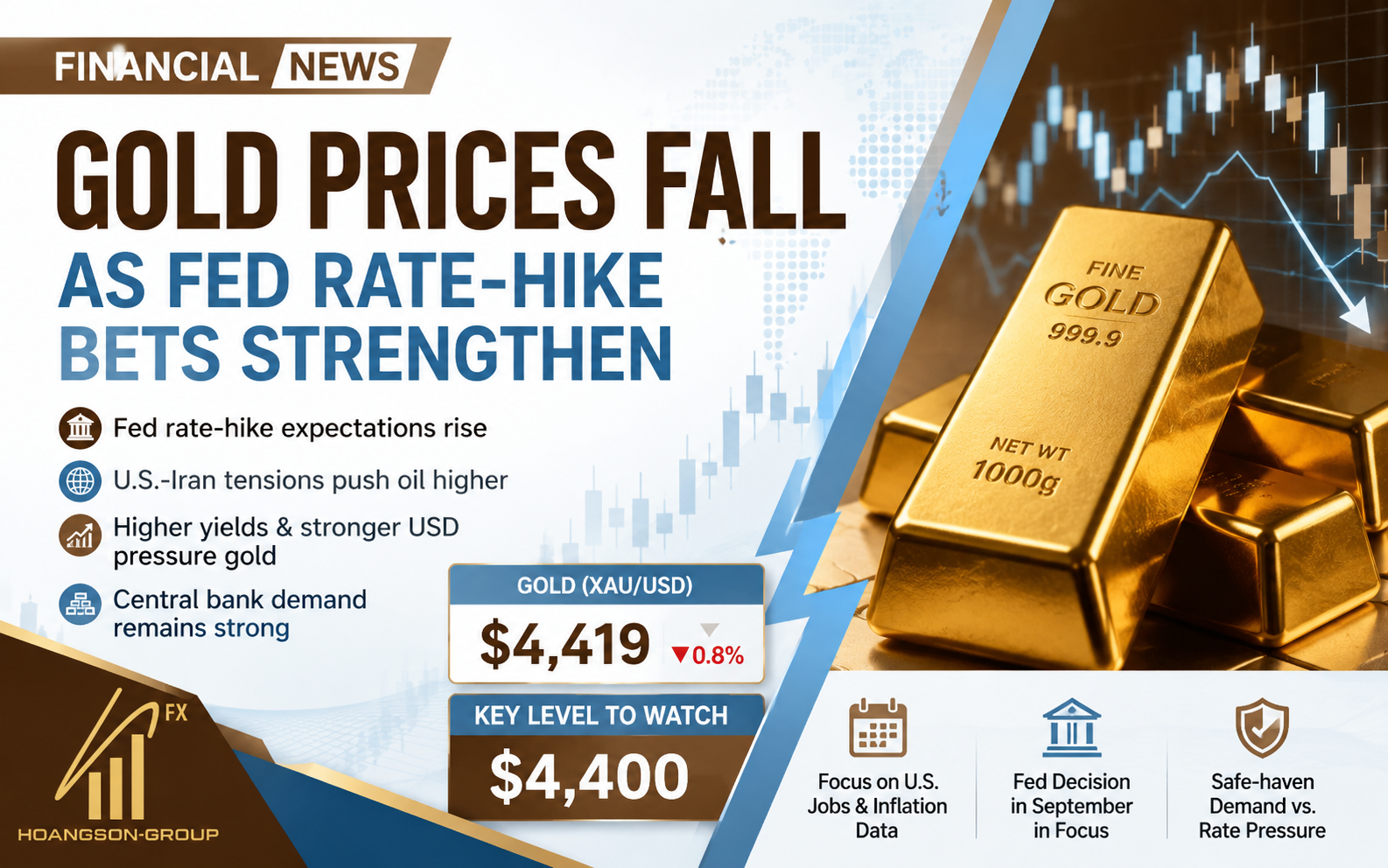
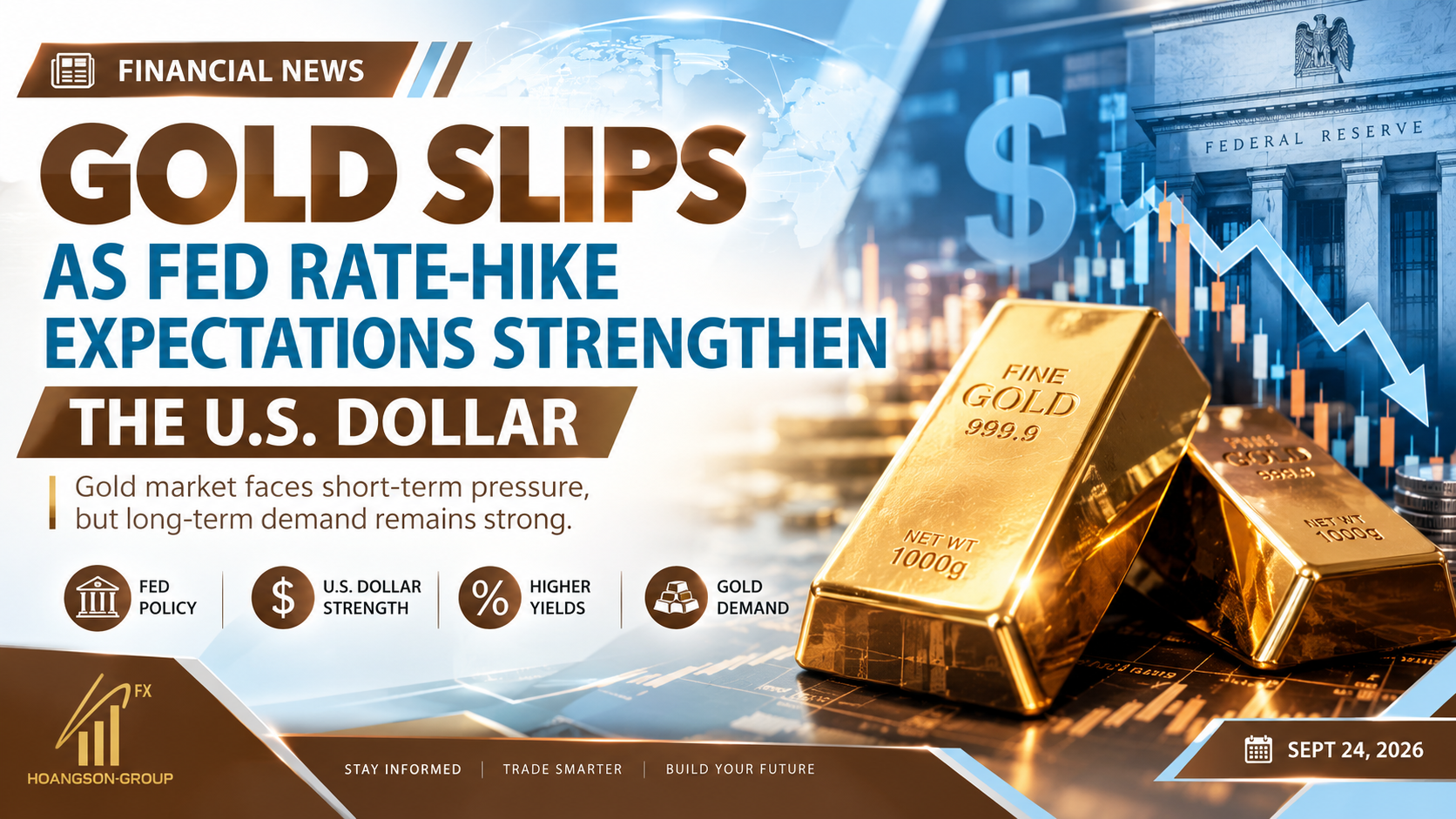
Gold prices came under renewed pressure on Tuesday as rising U.S. Treasury yields and growing expectations of a Federal Reserve interest-rate hike reduced demand for the non-yielding precious metal.
Spot gold fell more than 1% to around $4,393.89 per ounce, while U.S. gold futures declined to approximately $4,443.10. The move followed a sharp rise in Treasury yields, which reached their highest levels since January 2025, increasing the opportunity cost of holding gold.
Investor attention has increasingly shifted toward Federal Reserve policy following hawkish comments from Fed Chair Kevin Warsh. Markets are now pricing in a significantly higher probability of a September rate hike, with CME-linked expectations showing roughly a 66% chance of an increase.
Higher interest rates and rising bond yields generally weigh on gold because the metal does not generate interest income.
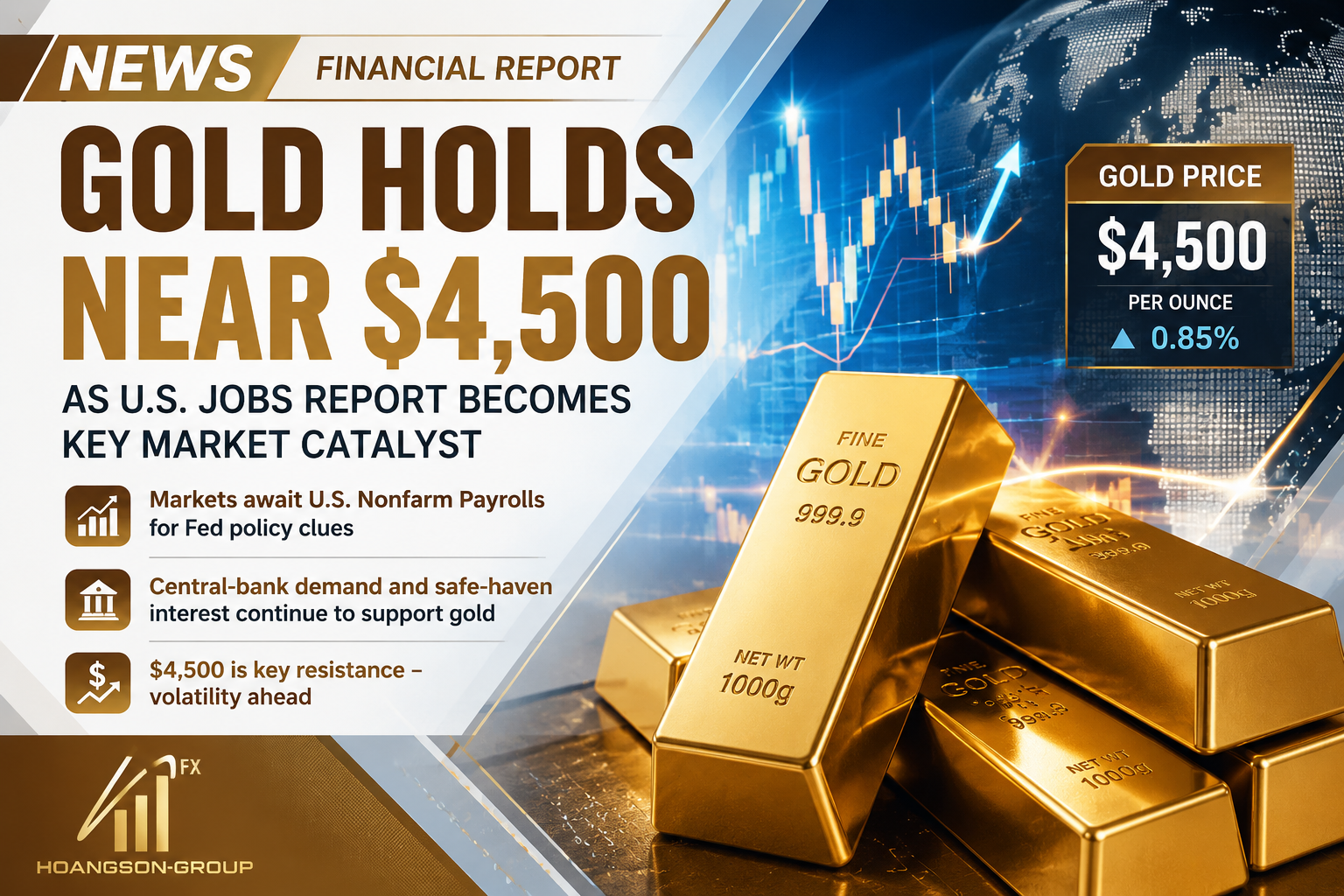
Traders are now waiting for a series of important U.S. economic releases, including JOLTS job openings, the ADP employment report and Friday's Nonfarm Payrolls (NFP).
A stronger-than-expected labor market could strengthen the case for tighter monetary policy and put further pressure on gold. Conversely, weaker employment data could revive expectations for easier Fed policy and provide support for XAU/USD.
Despite the recent sell-off, geopolitical tensions remain an important source of support for gold. Renewed conflict in the Middle East has increased concerns about inflation, energy prices and broader financial-market instability, maintaining demand for gold as a safe-haven asset.
The longer-term outlook remains supported by strong official-sector demand. According to the World Gold Council, central banks purchased 289 tonnes of gold in Q2 2026, while 89% of surveyed central banks expect global official gold reserves to increase over the next 12 months.
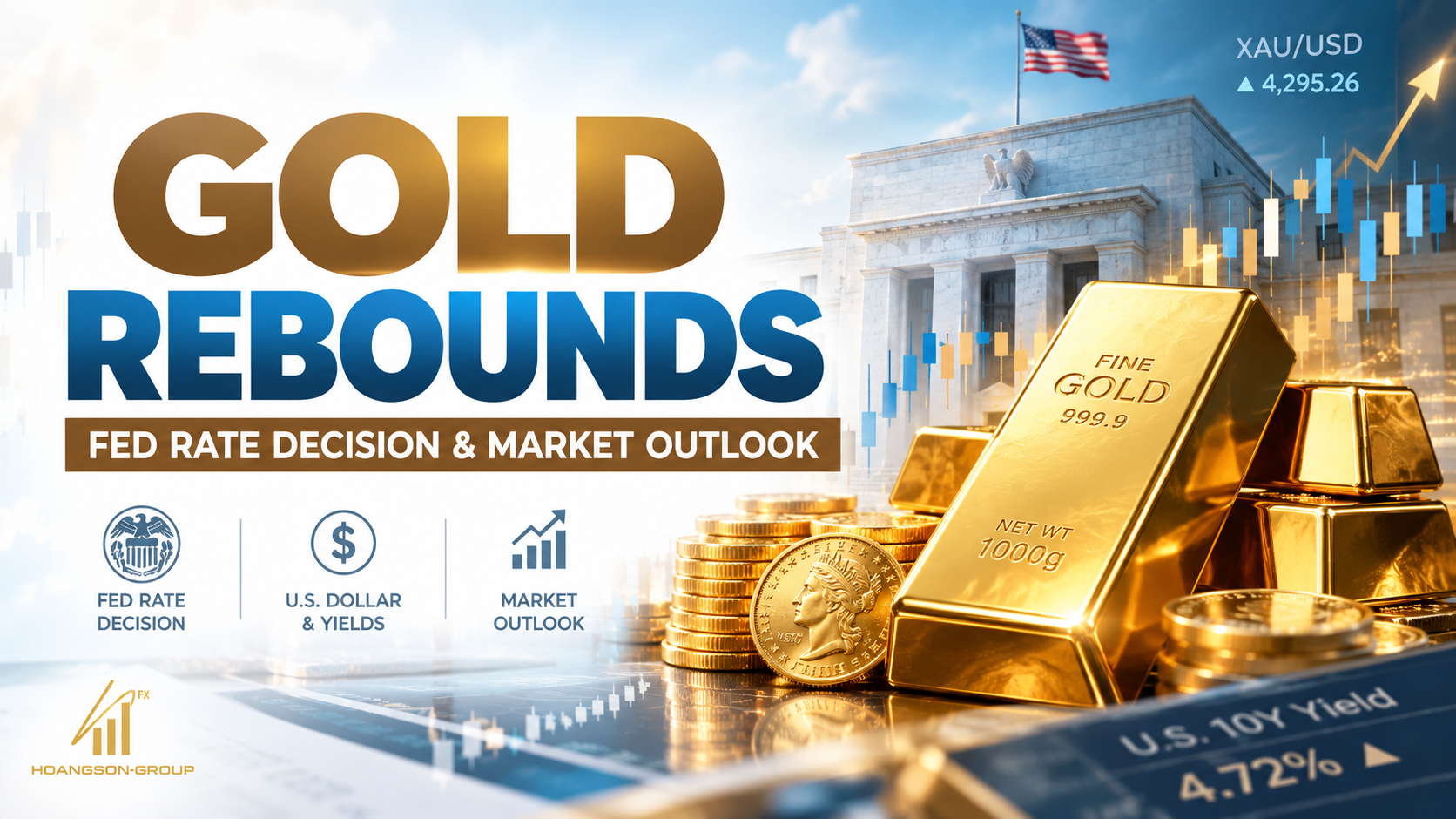
Gold is currently caught between two powerful forces: short-term pressure from higher yields and hawkish Fed expectations, versus longer-term support from central-bank buying and geopolitical uncertainty.
For traders, the upcoming U.S. employment data could become the next major catalyst. A strong NFP report may increase selling pressure, while weaker labor-market figures could help gold recover.