Shopping cart
Your cart empty!
Your cart empty!

Join 10k+ people to get notified about new posts, news and tips.
Do not worry we don't spam!
September 17, 2026 | Financial Markets
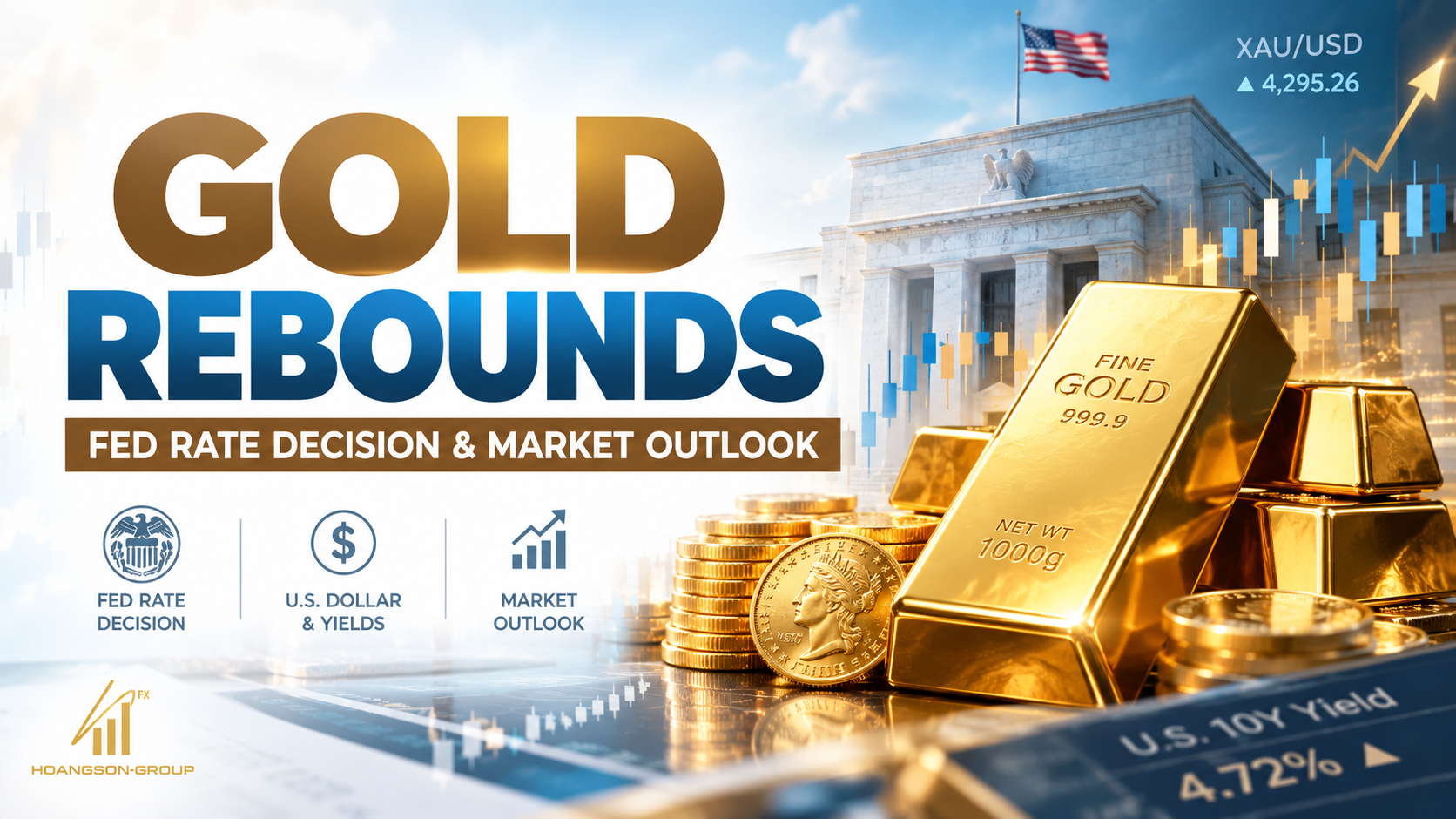
Gold prices rebounded on Thursday after falling to a near six-week low in the previous session, as investors assessed the Federal Reserve’s latest interest-rate decision and its implications for the precious-metal market.
Spot gold was trading around $4,295 an ounce, recovering roughly 0.8% after Wednesday's decline. The rebound came as investors absorbed the Fed's latest policy move and reassessed how much of the expected tightening was already reflected in market prices.
Despite the recovery, gold remains under pressure from a stronger U.S. dollar and rising Treasury yields.
The Federal Reserve raised its benchmark interest rate by 25 basis points to 3.75%-4.00% on September 16, citing continued inflation pressures and resilient economic activity.
The decision has increased attention on the Fed's future policy path. Market participants are now closely watching economic data and policymakers' projections for clues about whether additional rate increases could follow.
Higher interest rates generally create a less favorable environment for gold because bullion does not provide interest income. Rising Treasury yields can therefore increase the opportunity cost of holding the metal.
The U.S. dollar strengthened following the Fed decision, with the Dollar Index reaching around 100.3, its highest level in roughly seven weeks.
Treasury yields also moved higher, with the two-year U.S. yield reaching approximately 4.72%.
The combination of a stronger dollar and higher yields has become one of the key obstacles for gold in the short term.
However, Thursday's recovery suggests that some of the hawkish Fed expectations may already have been incorporated into prices.
Beyond the immediate impact of U.S. monetary policy, central-bank demand remains an important factor supporting the longer-term gold market.
The World Gold Council reported that central banks purchased approximately 288.9 tonnes of gold during the second quarter of 2026, bringing first-half net purchases to around 345 tonnes.
China has also remained an important buyer. The People's Bank of China added approximately 20.2 tonnes of gold in August, extending its purchasing streak to 22 consecutive months.
However, high gold prices continue to weigh on parts of physical demand, particularly jewellery consumption.
With the Fed decision now absorbed by markets, traders are likely to focus increasingly on upcoming U.S. economic indicators.
Key data points include:
These factors could determine whether gold's latest rebound develops into a broader recovery or becomes another temporary bounce within the recent correction.
The gold market is currently being pulled between short-term monetary-policy pressure and longer-term structural demand.
A sustained rise in the dollar and Treasury yields could continue to weigh on XAU/USD, while renewed investment demand, central-bank purchases and geopolitical uncertainty could provide support.
For traders, the $4,300 area remains an important psychological reference point, while the $4,330-$4,380 zone is an area to monitor for signs of renewed buying momentum.