Shopping cart
Your cart empty!
Your cart empty!

Join 10k+ people to get notified about new posts, news and tips.
Do not worry we don't spam!
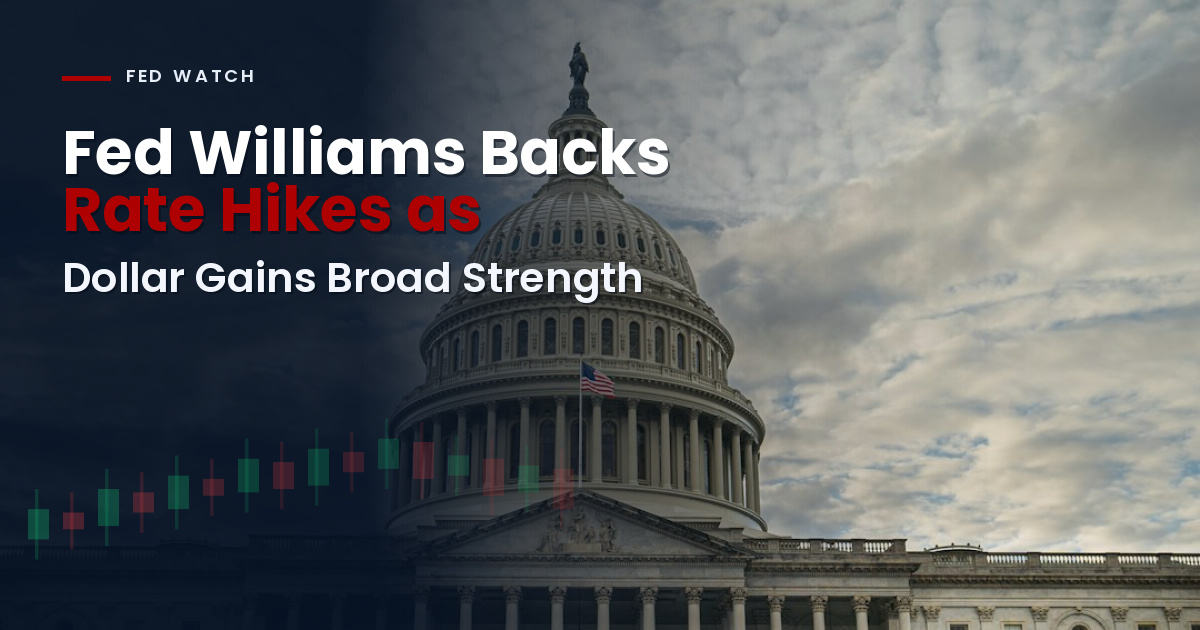
Washington, D.c., HSGFX - The US Dollar extended its upward momentum across global currency markets following recent remarks from Federal Reserve officials emphasizing the potential for further interest rate hikes. Market participants immediately adjusted their macroeconomic positioning, bidding up the greenback as the prospect of sustained monetary tightening came back into sharp focus.
Major currency pairs experienced heightened volatility during early trading sessions on Wednesday, 18 November 2026. The US Dollar Index (DXY) registered solid gains, putting sustained downward pressure on rival G10 currencies such as the Euro, the British Pound, and the Japanese Yen, while simultaneously weighing on non-yielding commodities.
The broader dollar rally found robust support in shifting US Treasury yield curves. As fixed-income traders reassessed the trajectory of United States monetary policy, short-to-medium-term yields climbed higher, directly enhancing the yield appeal of dollar-denominated assets.
Foreign exchange desks across New York and London noted that the absence of aggressive, emergency-style policy interventions actually reinforced confidence in the resilience of the US economy. Rather than triggering flight-to-safety liquidations, the measured tone adopted by Federal Reserve policymakers encouraged orderly capital flows back into greenback holdings.
This renewed dollar dominance highlights a widening policy divergence between the Federal Reserve and other major central banks, including the European Central Bank and the Bank of England. While overseas policymakers navigate domestic economic stagnation and softening labor markets, the Fed retains room to contemplate additional tightening measures.
Consequently, the EUR/USD pair drifted lower toward critical technical support levels during European trading hours. Meanwhile, the USD/JPY pair hovered near recent multi-week highs as Japanese monetary authorities maintained an ultra-loose policy stance, widening the interest rate differential between Washington and Tokyo.
During the Asian session, regional currencies traded defensively against the surging greenback. Market liquidity remained stable, though institutional desks reported increased hedging activity ahead of incoming macroeconomic releases from the United States.
Forex traders are now shifting their attention to upcoming inflation reports, employment metrics, and forthcoming central bank guidance. These upcoming indicators will heavily influence whether the Federal Reserve follows through with additional policy tightening or pauses its current rate-hiking cycle in the months ahead.