Shopping cart
Your cart empty!

Your cart empty!

Join 10k+ people to get notified about new posts, news and tips.
Do not worry we don't spam!
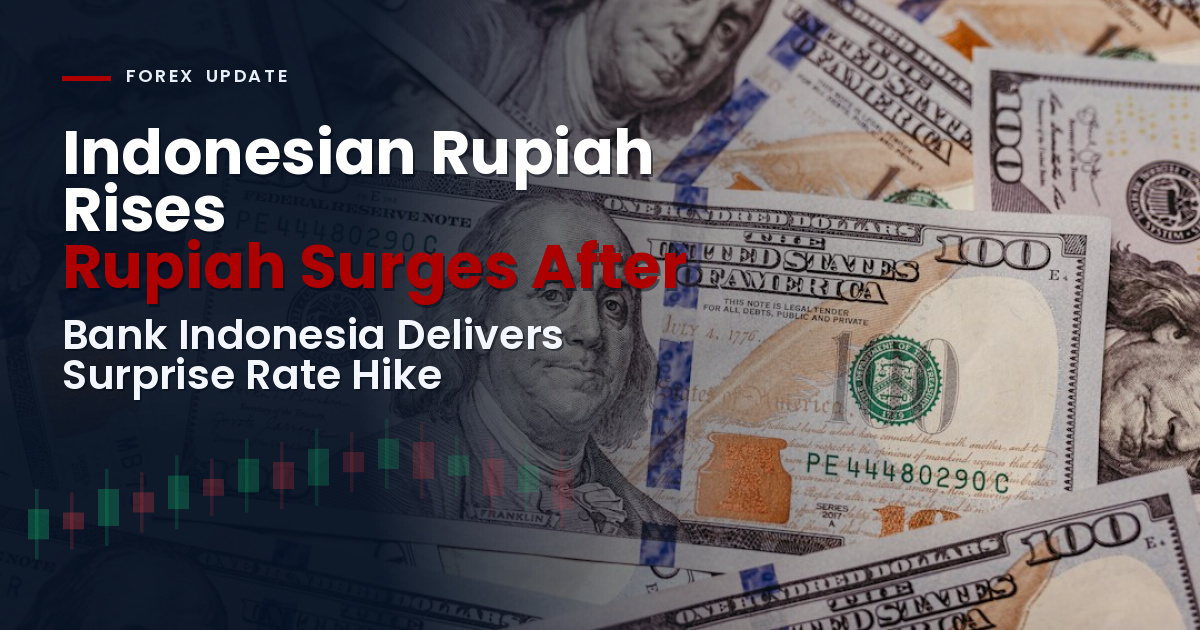
Global, HSGFX - The Indonesian Rupiah advanced sharply against major counterparts following a surprise monetary policy decision by Bank Indonesia. Central bank officials opted to deliver an unexpected 25-basis-point interest rate hike to stabilize domestic currency valuations against persistent external pressures.
This unexpected policy tightening underscores a growing divergence in central bank trajectories across emerging and developed economies. While major G10 monetary authorities weigh potential easing cycles, emerging market central banks continue deploying aggressive defensive measures to safeguard domestic liquidity and curb imported inflation.
Broad US Dollar strength has dominated global currency flows throughout recent sessions, driven by resilient macroeconomic prints out of the United States. The US Dollar Index (DXY) maintained an elevated posture as Treasury yields hovered near multi-week highs, forcing foreign exchange traders to reassess risk appetite across Asian and European trading desks.
Asian regional currencies have faced heightened volatility amid shifting expectations regarding Federal Reserve policy paths. The rupiah's decisive reaction to the Bank Indonesia rate increase highlights the efficacy of aggressive monetary intervention in defending regional exchange rates against broader greenback dominance.
Market participants across New York, London, and Tokyo are closely monitoring how secondary Asian central banks will respond to widening interest rate differentials. Sustained capital outflows from regional equity and debt markets have amplified the urgency for defensive monetary policy adjustments.
Beyond Southeast Asia, the broader foreign exchange landscape remains heavily dictated by transatlantic interest rate spreads. The European Central Bank and the Bank of England continue evaluating incoming inflation data to time their respective monetary pivots, creating stark yield divergence against US debt instruments.
US Treasury yields remain a primary catalyst for global asset allocation. Elevated benchmark yields continue to attract foreign capital into dollar-denominated assets, placing persistent depreciation pressure on both developed and emerging market currencies.
Currency desks are positioning themselves ahead of a dense macroeconomic calendar featuring critical labor market reports, consumer price indices, and upcoming central bank minutes. These scheduled releases will provide definitive clues regarding the Federal Reserve's terminal rate and the potential timing of future monetary adjustments.
Institutional analysts emphasize that foreign exchange volatility will likely remain elevated as algorithmic and discretionary traders react to incoming growth metrics. Liquidity conditions across major currency pairs, including USD/IDR, EUR/USD, and USD/JPY, are expected to reflect heightened sensitivity to upcoming inflation prints.
Market participants continue to evaluate cross-asset correlations, particularly between precious metals, sovereign debt, and spot forex valuations. As the global financial system navigates this phase of monetary policy transition, upcoming tier-one economic data releases will ultimately dictate the next directional trend for international currencies.