Shopping cart
Your cart empty!
Your cart empty!

Join 10k+ people to get notified about new posts, news and tips.
Do not worry we don't spam!
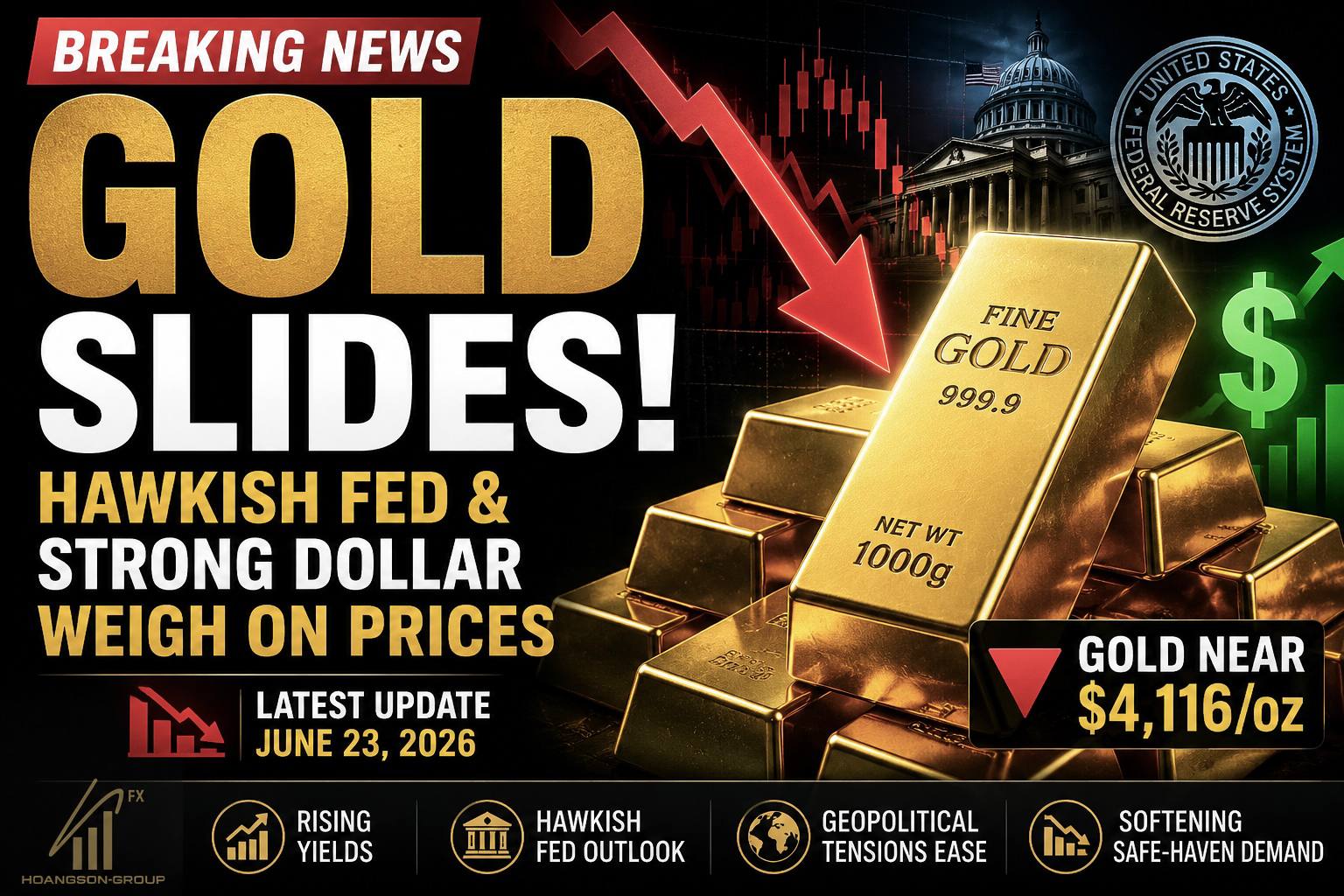
June 23, 2026 | Global Markets Report
Gold prices came under renewed pressure on Tuesday as investors continued to adjust expectations for U.S. monetary policy following increasingly hawkish signals from Federal Reserve officials.
Spot gold fell toward the $4,100 area, marking one of its lowest levels in recent weeks. The decline was accompanied by a broad strengthening of the U.S. dollar and higher Treasury yields, both of which typically create headwinds for precious metals. Gold does not provide interest income, making it less attractive when bond yields rise and the opportunity cost of holding bullion increases.
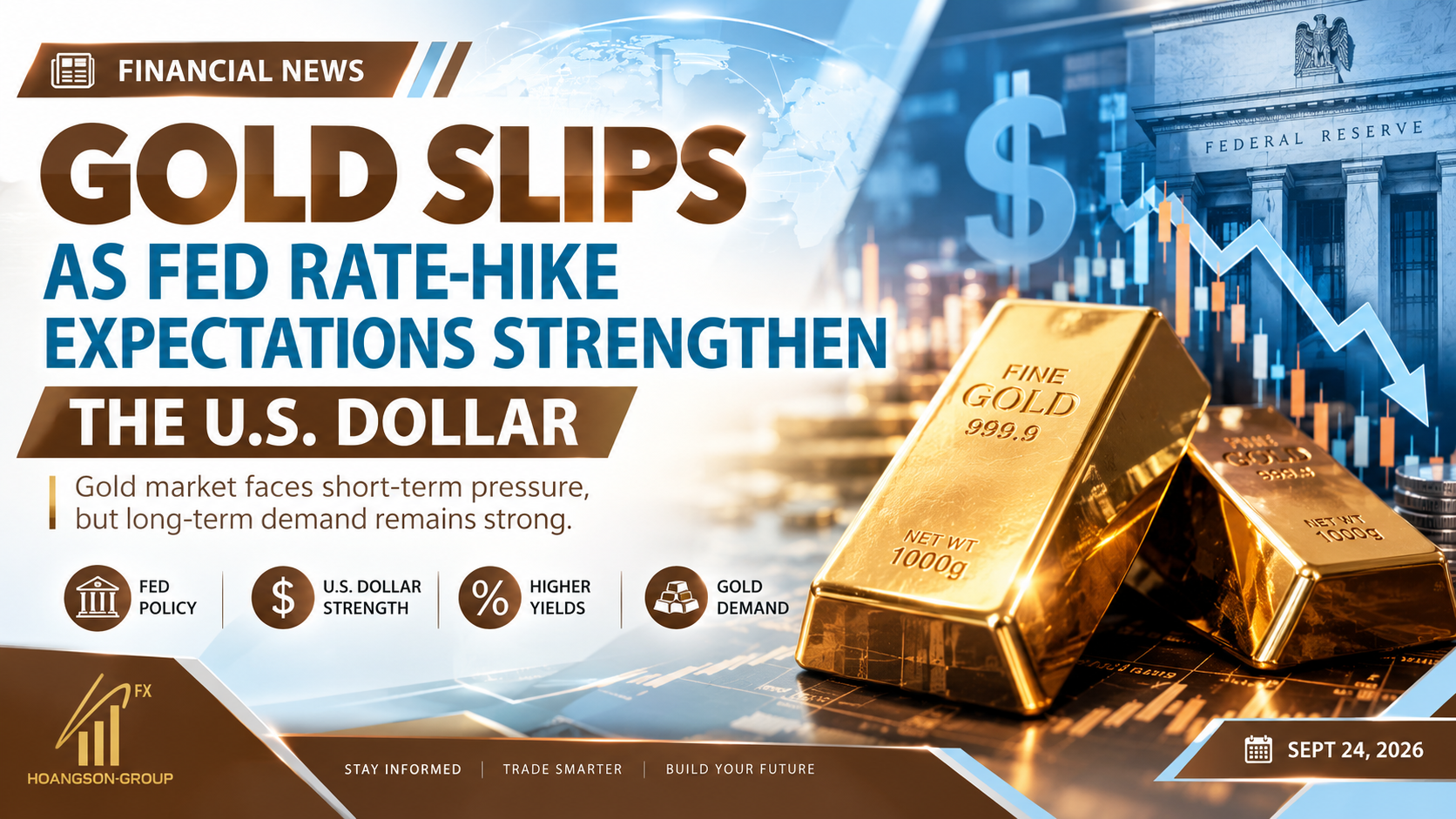
Market participants have increasingly priced in the possibility that the Federal Reserve may keep rates elevated for longer or even consider additional tightening if inflation remains persistent. Nearly half of Fed policymakers are now signaling the potential for further rate increases this year, a shift that has significantly altered sentiment across commodity and precious-metal markets.
The U.S. Dollar Index has strengthened sharply over recent sessions, reaching levels not seen in approximately a year. A stronger dollar raises the cost of gold for international buyers and tends to reduce global demand.
Analysts note that recent economic data, including resilient labor market conditions and concerns about energy-driven inflation, have reinforced expectations that U.S. interest rates may remain restrictive for an extended period. This has supported the greenback while simultaneously pressuring gold prices.
Gold's traditional role as a safe-haven asset has also been challenged by improving geopolitical sentiment.
Recent progress in diplomatic discussions between the United States and Iran has helped ease fears of a broader regional conflict. Oil prices have retreated from recent highs, reducing concerns that an energy shock could further destabilize global markets. As a result, investors have unwound some of the geopolitical premium previously embedded in gold prices.
While geopolitical risks remain present, markets currently appear more focused on monetary policy and inflation dynamics than on conflict-related safe-haven demand.
According to commentary from the World Gold Council, global gold ETFs experienced modest outflows during recent months as investors shifted toward risk assets amid improving market sentiment. The organization noted that positive equity performance and reduced market volatility weighed on investment demand for bullion.
However, central-bank purchases and long-term strategic demand continue to provide structural support for the precious metal market, limiting the severity of recent declines.
From a technical perspective, gold remains under pressure after breaking below several key support zones earlier this month. Market participants are closely monitoring the psychological $4,000 level, which many analysts view as an important medium-term support area.
Recent price action indicates that rallies are increasingly being sold as traders position for a potentially higher-for-longer interest-rate environment. Some analysts warn that a sustained break below $4,000 could trigger additional downside momentum, while stabilization above current levels could encourage bargain hunting from longer-term investors.