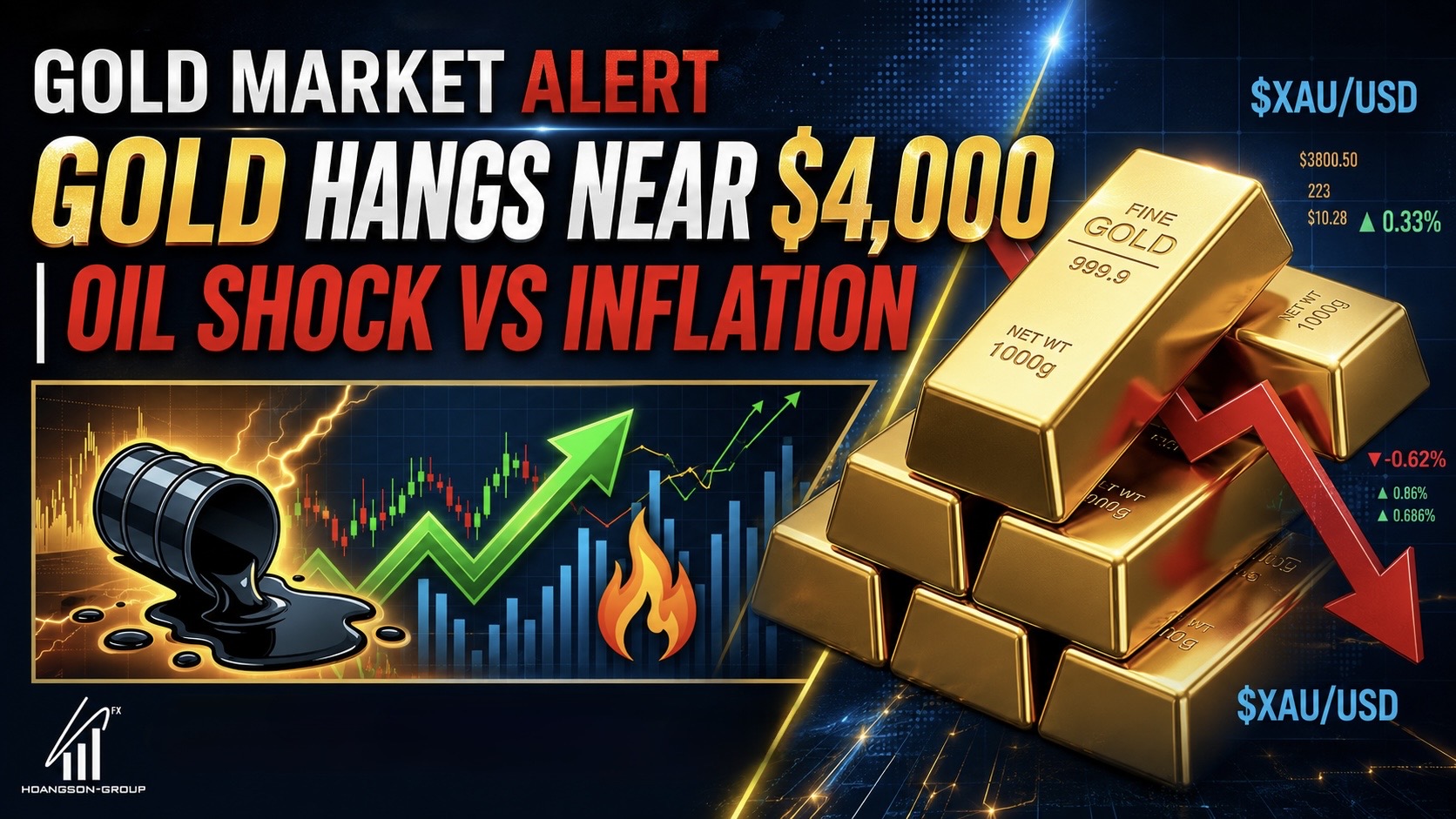
PHNOM PENH — Gold prices (XAU/USD) stabilized just under the critical $4,000 per ounce psychological threshold on Friday, though bullion remains on track for a steep weekly loss exceeding 3%. The precious metal is currently locked in a fierce macro tug-of-war, as a sudden energy shock offsets cooler-than-expected U.S. inflation data and pressures non-yielding assets.
The market landscape shifted dramatically this week following an escalation of military strikes between the U.S. and Iranian targets, shattering recent interim peace agreements. While geopolitical tensions typically drive safe-haven capital directly into bullion, a 10% surge in crude oil—with West Texas Intermediate (WTI) approaching $80 and Brent crude breaching $85—has complicated the narrative. Market participants note that surging energy costs threaten to trigger stickier long-term inflation, reinforcing expectations that the Federal Reserve will maintain a restrictive policy stance for longer.
This hawkish outlook was echoed by central bank officials despite soft June Consumer Price Index (CPI) and Producer Price Index (PPI) prints. Dallas Fed President Lorie Logan warned that recent price declines are insufficient to warrant immediate policy easing, while Fed Vice Chair Philip Jefferson signaled a willingness to entertain further tightening if core data stalls. According to the CME FedWatch Tool, fixed-income markets are currently pricing in a 75% probability of a 25-basis-point rate hike by December, keeping the two-year U.S. Treasury yield elevated at 4.155% and raising the opportunity cost of holding gold.
Providing a critical cushion beneath the market is relentless physical demand from global central banks. The People’s Bank of China (PBoC) extended its gold-buying streak to 20 consecutive months, pushing its total official reserves to 2,346 tonnes. While domestic retail jewelry demand has slowed due to high prices, physical bar, coin, and gold ETF inflows within Asian markets continue to anchor long-term institutional support.
From a technical standpoint, XAU/USD remains confined within a descending corrective channel on both daily and weekly timeframes, trading well below its 200-day Simple Moving Average (SMA). Market participants are closely watching immediate horizontal support at $3,951; a decisive daily close below this floor could trigger a deeper liquidation toward the channel bottom near $3,661. Conversely, bulls face a steep uphill battle, needing a clean break above the channel resistance at $4,082 and the formidable 200-day SMA ceiling at $4,495 to reclaim a structural uptrend.
Prev Article
US Dollar Weakens as Cooling Inflation Reduces Fed Rate Hike Expectations
Next Article
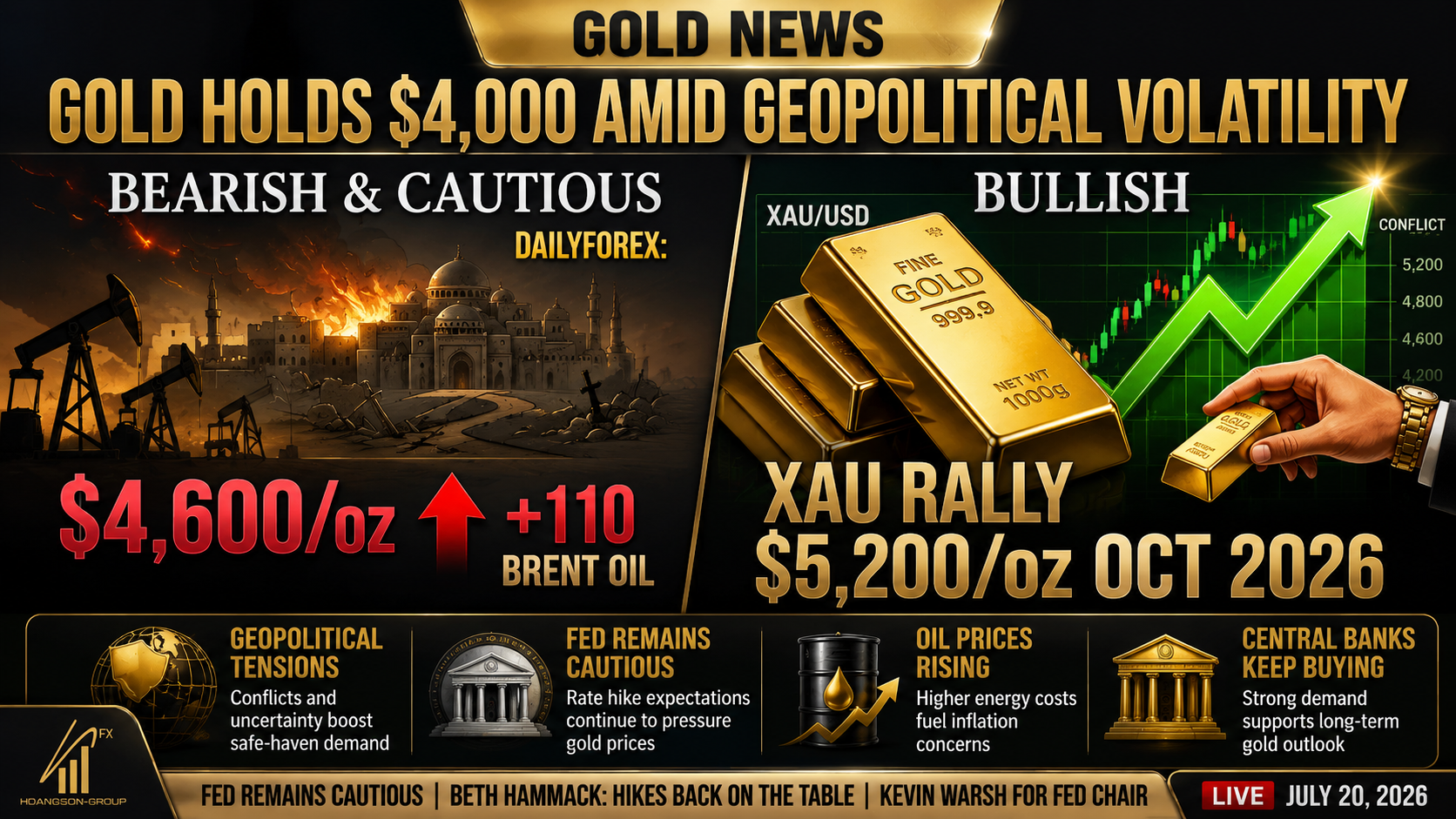
Gold Holds Above $4,000 as Geopolitical Risks Offset Hawkish Fed Outlook