Shopping cart
Your cart empty!
Your cart empty!

Join 10k+ people to get notified about new posts, news and tips.
Do not worry we don't spam!
LONDON / NEW YORK — The global financial landscape experienced a dramatic realignment on Friday and through early Monday trading as a major "jobs shock" out of the United States sent shockwaves through the commodities, currency, and equity markets.
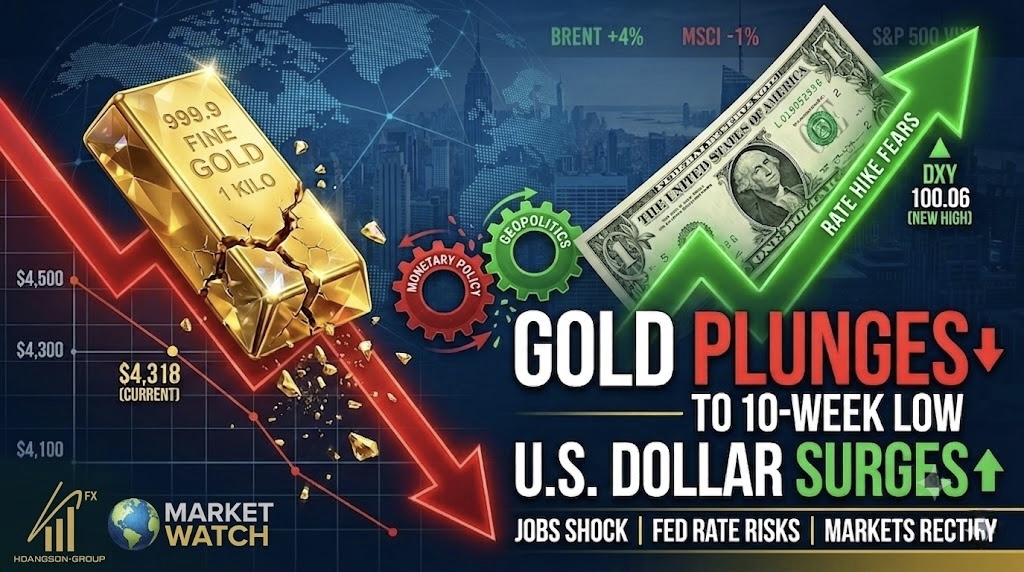
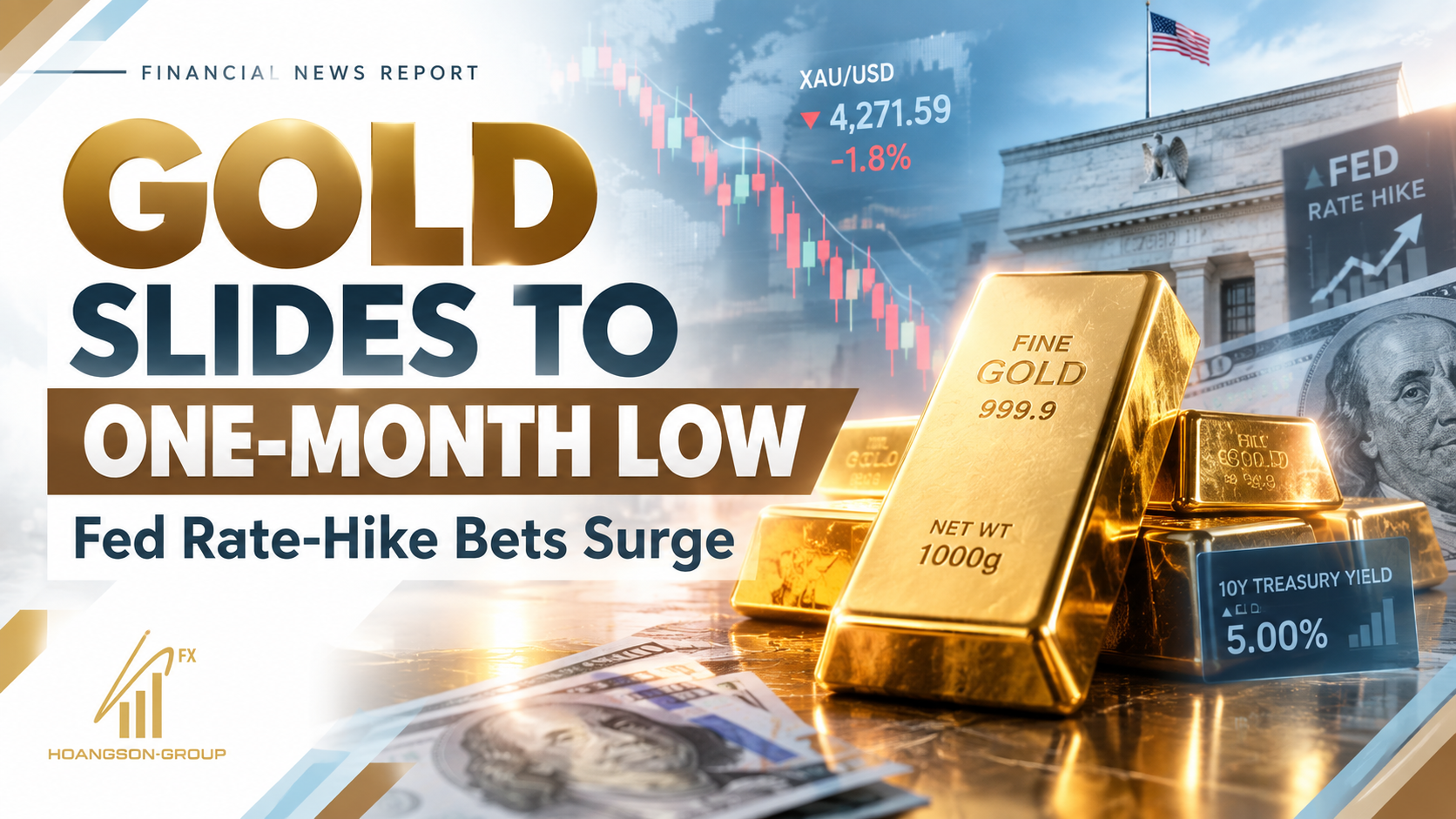
Gold suffered its worst weekly rout in months, erasing its remaining gains for the year to trade near $4,318 per troy ounce. The aggressive sell-off was directly triggered by a stark shift in U.S. monetary policy expectations, a rapidly strengthening U.S. dollar, and structural complications arising from geopolitical tensions in the Middle East.
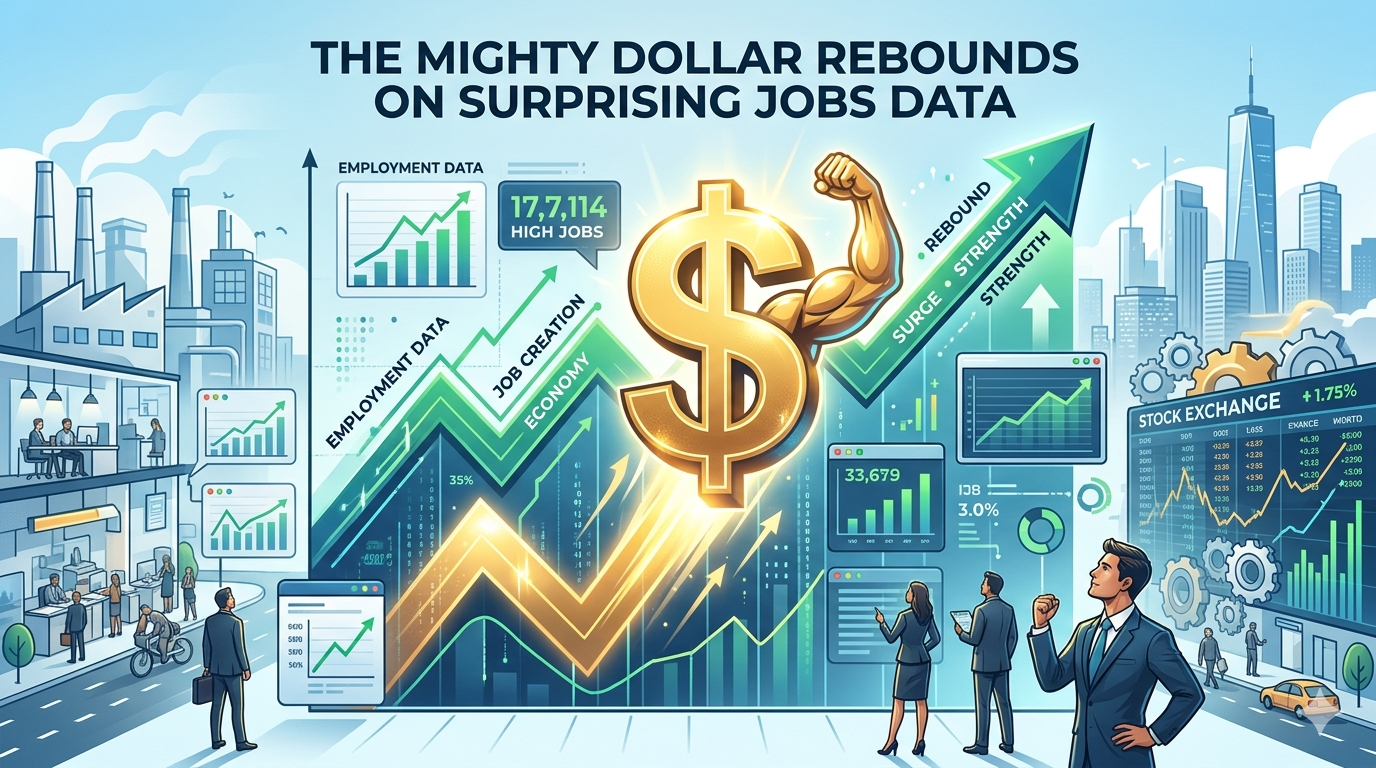
The primary catalyst for the market shift was Friday's Non-Farm Payrolls (NFP) report released by the U.S. Bureau of Labor Statistics. The data revealed that the U.S. economy added 172,000 jobs last month—nearly double the consensus forecast of analysts. Additionally, April’s employment figures were revised upward.
This unexpected labor market strength immediately shattered Wall Street’s hopes for interest rate cuts. Instead, it fortified expectations that the Federal Reserve will adopt a significantly more hawkish stance.
Monetary policy expectations have also adjusted following the nomination of Kevin Warsh as Fed Chairman. Under his incoming leadership, the central bank is reportedly planning to eliminate traditional "forward guidance" policies, including the closely watched "dot plot" interest rate forecasts.
According to the CME FedWatch Tool, traders are now pricing in a 50-50 chance of a 25-basis-point interest rate hike as early as November or December. Market consensus for the benchmark interest rate by year-end has climbed toward 3.87%, a stark contrast to the aggressive easing cycles previously anticipated by investors.
The ongoing war involving Iran and subsequent energy anxieties would traditionally provide the ideal backdrop for safe-haven assets like gold. However, the conflict has instead triggered an energy-driven inflationary pulse.
While Brent crude oil futures climbed nearly 4% over the past week due to systemic risks surrounding key trade arteries like the Strait of Hormuz, rising oil prices have stoked broader global inflation fears. Higher projected inflation strengthens the argument for central banks to hold interest rates higher for longer, driving up the opportunity cost of holding non-yielding physical bullion.
Concurrently, institutional capital has fled toward the U.S. Dollar Index (DXY), which surged past the 100.06 mark (+0.66%). Because gold is priced globally in greenbacks, a stronger U.S. dollar places direct mechanical and technical pressure on the metal, rendering it more expensive for international buyers.
Market analysts view the current downward momentum as a tactical pullback rather than a structural breakdown of the multi-year commodities bull market.
Commerzbank recently revised its year-end gold price target from $5,000 to $4,800, citing the short-term interest rate shock, but noted that a projected two-month geopolitical stabilization window could set the stage for an 8% upside reversal before 2027.
Technical indicators from XTB note that if gold fails to defend its current local lows, a deeper technical correction could eye the $4,100 support zone. However, if gold manages to stabilize and reclaim the $4,500–$4,600 consolidation range, it would neutralize the current bearish momentum.
Longer-term, investment banks like J.P. Morgan and Goldman Sachs maintain a bullish outlook. Analysts point out that despite short-term derivatives liquidations by hedge funds, structural demand remains firmly intact. Emerging market central banks continue to systematically diversify their reserves away from fiat currencies, providing a strong structural floor for precious metals heading into the latter half of the year.