Shopping cart
Your cart empty!
Your cart empty!

Join 10k+ people to get notified about new posts, news and tips.
Do not worry we don't spam!
August 19, 2026 | Global Financial Markets | Gold (XAU/USD)
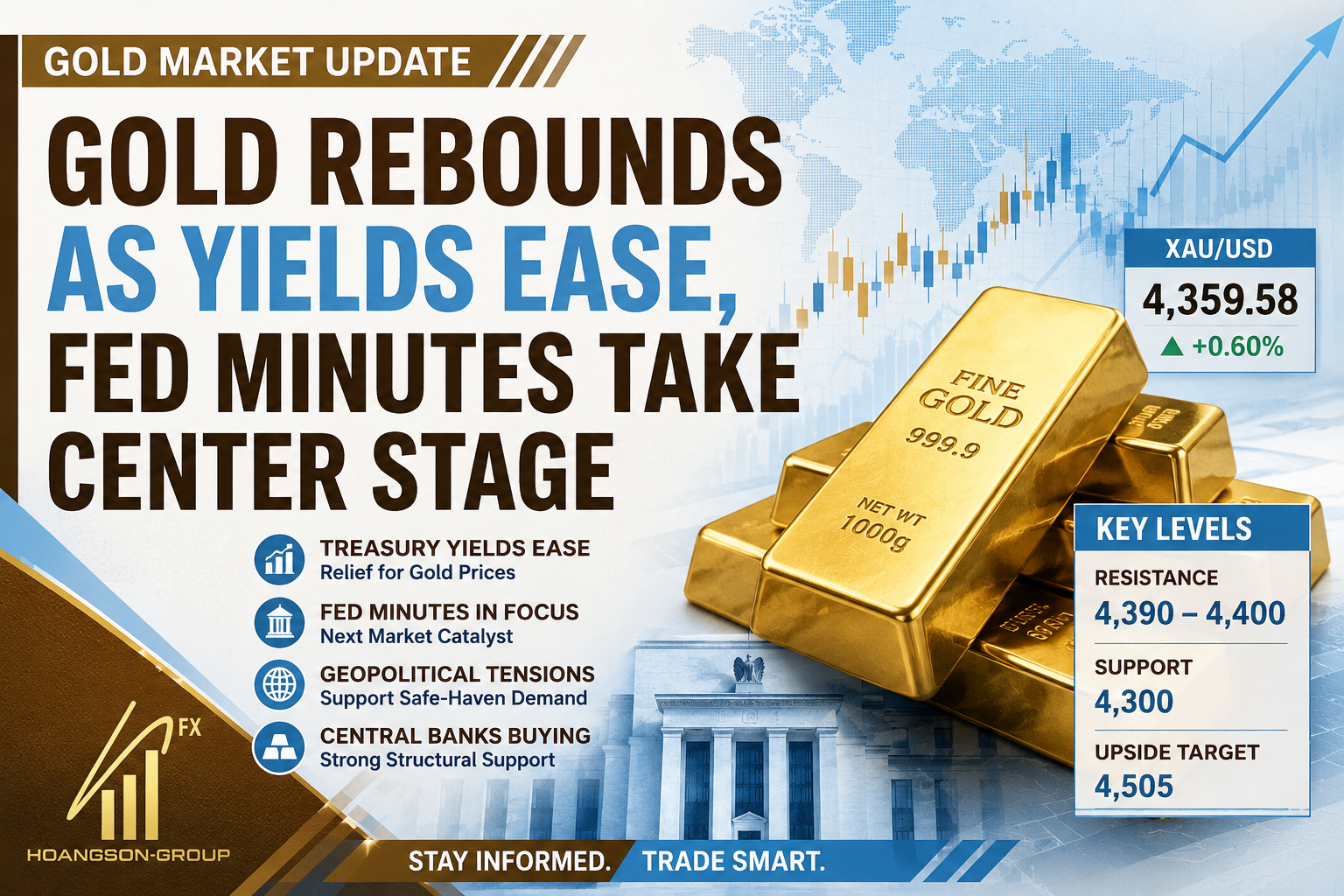
Gold prices moved higher on Wednesday as U.S. Treasury yields eased from their recent highs, giving some relief to the precious-metal market following a sharp decline in the previous session.
Spot gold rose approximately 0.6% to around $4,359.58 per ounce, recovering part of Tuesday's nearly 2% decline. The latest move highlights the continued sensitivity of gold to movements in U.S. bond yields and expectations for Federal Reserve policy.
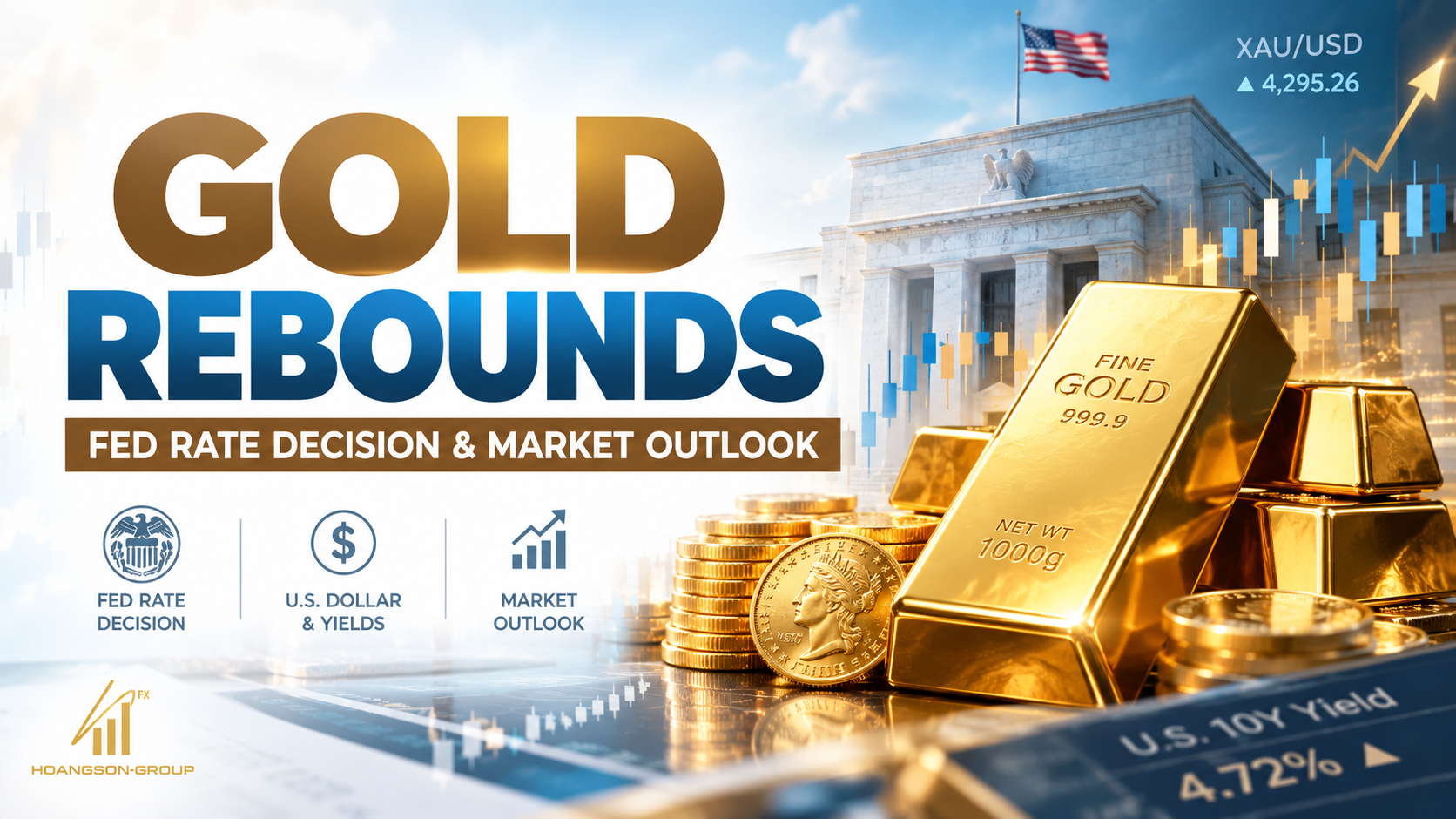
The rebound comes at a critical moment for financial markets, with investors awaiting the release of the Federal Reserve's July meeting minutes for additional clues about the direction of U.S. interest rates.
The recent sell-off in gold was largely driven by a sharp increase in U.S. Treasury yields.
The U.S. 30-year Treasury yield recently climbed to around 5.23%, its highest level since 2007, while the 10-year yield also moved toward elevated levels. The bond-market sell-off has been fueled by concerns surrounding inflation, government debt, increased Treasury issuance and geopolitical risks affecting energy prices.
Higher yields generally create pressure on gold because the metal does not pay interest. When investors can earn higher returns from government bonds, the opportunity cost of holding gold increases.
However, Wednesday's stabilization in bond yields has allowed gold to regain some ground.
The Federal Reserve's July meeting minutes are now the market's primary focus.
Current market pricing indicates roughly a 67% probability that the Fed will keep rates unchanged, compared with around 33% probability of a rate hike. Recent softer U.S. economic data has reduced expectations for aggressive monetary tightening.
For gold traders, the interpretation is straightforward:
A hawkish Fed message could push yields and the U.S. dollar higher, creating additional downside pressure on gold.
A dovish message could weaken yields and the dollar, potentially supporting another bullish move in XAU/USD.
The market is therefore likely to react strongly to any language suggesting how policymakers view inflation, employment and future interest-rate decisions.
Gold's longer-term story remains supported by geopolitical uncertainty.
Tensions surrounding the United States, Iran and the Strait of Hormuz continue to influence energy markets. Oil prices have risen for several consecutive sessions as investors assess the possibility of prolonged disruption and higher energy costs.
Higher oil prices create a complicated environment for gold.
On one side, geopolitical instability increases demand for safe-haven assets such as gold.
On the other side, higher energy prices can increase inflation expectations, potentially forcing central banks to maintain restrictive monetary policy for longer. That can push bond yields higher and temporarily hurt gold.
This conflict between safe-haven demand and higher-rate pressure is currently one of the defining characteristics of the gold market.
While short-term traders remain focused on the Federal Reserve and Treasury yields, central-bank demand continues to provide an important longer-term foundation for gold.
The World Gold Council's latest research indicates that central banks remain structurally positive toward gold. In its 2026 Central Bank Gold Reserves Survey, 89% of respondents expected global central-bank gold reserves to increase over the following 12 months, while a record 45% expected their own institution's holdings to rise.
World Gold Council research also expects central banks to remain significant gold buyers during the remainder of 2026, while investment demand is expected to remain constructive amid geopolitical uncertainty, inflation concerns and monetary-policy uncertainty.
This provides gold with a structural source of demand that is less dependent on short-term Fed expectations.
Gold-backed exchange-traded funds are another important component of investment demand.
World Gold Council data showed that global physically backed gold ETFs experienced $8.9 billion of outflows in June, but first-half net flows remained positive at approximately $8 billion. Asian funds were a major source of inflows, while North America recorded losses during the first half of the year.
The World Gold Council expects Western ETF flows to remain particularly sensitive to real yields, monetary-policy expectations and movements in the U.S. dollar.
That means ETF flows will remain an important indicator of whether institutional investors are returning to gold during periods of market volatility.
From a technical perspective, gold is currently trading around the $4,350–$4,360 area, following its latest rebound. Trading Economics data places gold around $4,359.79 per ounce, with the metal up approximately 8.8% over the past month and more than 30% higher than the same period last year.
The immediate technical levels are becoming increasingly important.
$4,390–$4,400
A decisive break and sustained trading above this zone could signal renewed bullish momentum.
According to Reuters technical analysis, a break above approximately $4,390 could open the way toward $4,505.
$4,300
This area represents an important short-term support zone.
A decisive break below $4,300 could increase selling pressure and expose gold to a deeper correction.
Therefore, traders are watching the $4,300–$4,400 range closely for the next significant directional signal.
Despite recent volatility, gold's broader market structure continues to receive support from several major forces:
At the same time, gold faces significant short-term risks from:
The World Gold Council's outlook remains constructive but recognizes that investment demand, particularly Western ETF demand, could fluctuate significantly depending on real yields, the dollar and expectations for monetary policy.
The immediate focus is the Federal Reserve July meeting minutes.
Beyond the minutes, traders should closely monitor:
1. U.S. Treasury yields Falling yields would generally support gold, while another sharp rise could pressure XAU/USD.
2. U.S. Dollar Index A weaker dollar tends to improve gold's attractiveness to international investors.
3. Federal Reserve expectations Any shift toward easier monetary policy could provide another bullish catalyst.
4. Oil prices and geopolitical developments Higher energy prices could simultaneously increase safe-haven demand and inflation concerns.
5. The $4,300–$4,400 technical range A breakout or breakdown from this zone could determine the next short-term direction.
The gold market is currently experiencing a battle between short-term macroeconomic pressure and long-term structural demand.
The recent rise in Treasury yields created significant selling pressure, demonstrating that gold remains highly sensitive to interest-rate expectations. However, the subsequent rebound as yields eased shows that buyers remain active around lower prices.
The broader picture remains supported by central-bank demand, geopolitical uncertainty and continued investor interest in gold as a hedge against inflation, currency and fiscal risks.
For the immediate future, the $4,300 support level and $4,390–$4,400 resistance zone are likely to be critical.
A sustained move above resistance could reopen the path toward $4,505, while a decisive break below $4,300 could signal a deeper correction.