Shopping cart
Your cart empty!
Your cart empty!

Join 10k+ people to get notified about new posts, news and tips.
Do not worry we don't spam!
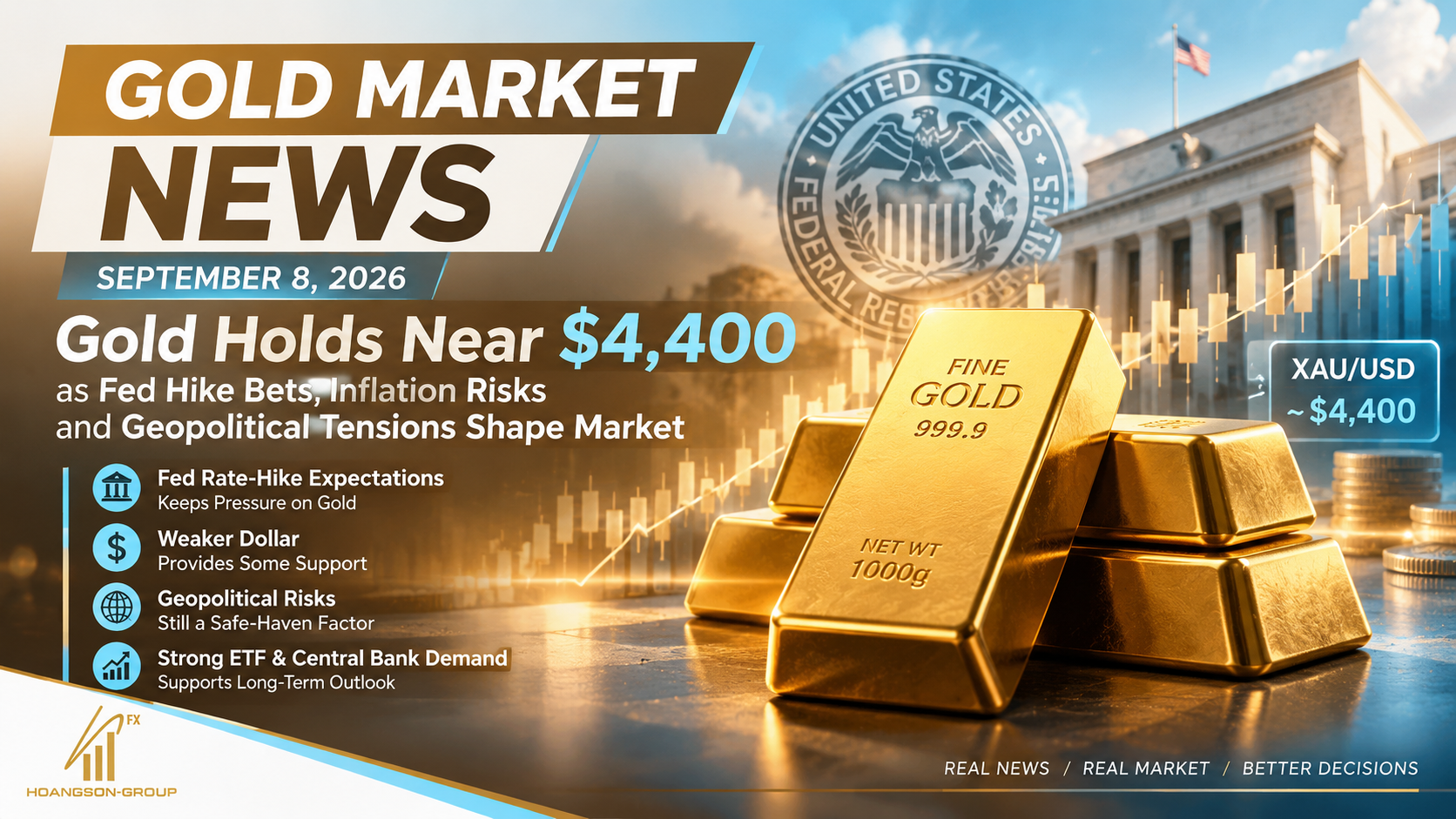
Gold prices remained under pressure on Tuesday, September 8, as rising oil prices and stronger expectations for a Federal Reserve rate hike offset support from a weaker U.S. dollar and continued geopolitical uncertainty.
Spot gold was trading around $4,400 per ounce, with the market moving in a relatively tight range as traders waited for fresh U.S. inflation data later this week. Reuters reported that spot gold was around $4,400.66, while U.S. gold futures for December were near $4,445.20.
Recent strong U.S. employment data has increased expectations that the Federal Reserve could raise interest rates at its September meeting. Market pricing has moved to roughly a 61% probability of a rate hike.
Higher interest rates and Treasury yields generally create headwinds for gold because bullion does not pay interest.
The market is therefore turning its attention to this week's U.S. Producer Price Index (PPI) and Consumer Price Index (CPI) reports. A hotter inflation reading could strengthen the case for tighter monetary policy and put additional pressure on gold, while softer inflation could revive bullish momentum.
Rising crude oil prices are also becoming important for the gold market. Brent crude moved close to $100 per barrel, increasing concerns that higher energy costs could keep inflation elevated. That has strengthened the argument for higher U.S. interest rates.
This creates a complicated environment for gold: geopolitical tensions normally support safe-haven demand, but if those tensions push oil and inflation higher, they can simultaneously increase pressure on gold through higher interest-rate expectations.
Despite the short-term pressure, the broader gold market continues to receive strong investment demand. Global gold-backed ETFs attracted approximately $17.1 billion in August, bringing total 2026 inflows to around $27.7 billion.
Central-bank demand also remains an important structural factor supporting gold prices, although recent monthly purchases have shown some moderation.
Gold has recently experienced a significant correction from its August highs, but buyers continue to defend the $4,400 area. Current market data places gold around $4,390–$4,410, depending on the pricing source.
The immediate focus is now on whether gold can reclaim the $4,450 area. A sustained move above that level could improve the short-term bullish structure, while a decisive break below the $4,400 region would increase the risk of another leg lower.