Shopping cart
Your cart empty!
Your cart empty!

Join 10k+ people to get notified about new posts, news and tips.
Do not worry we don't spam!

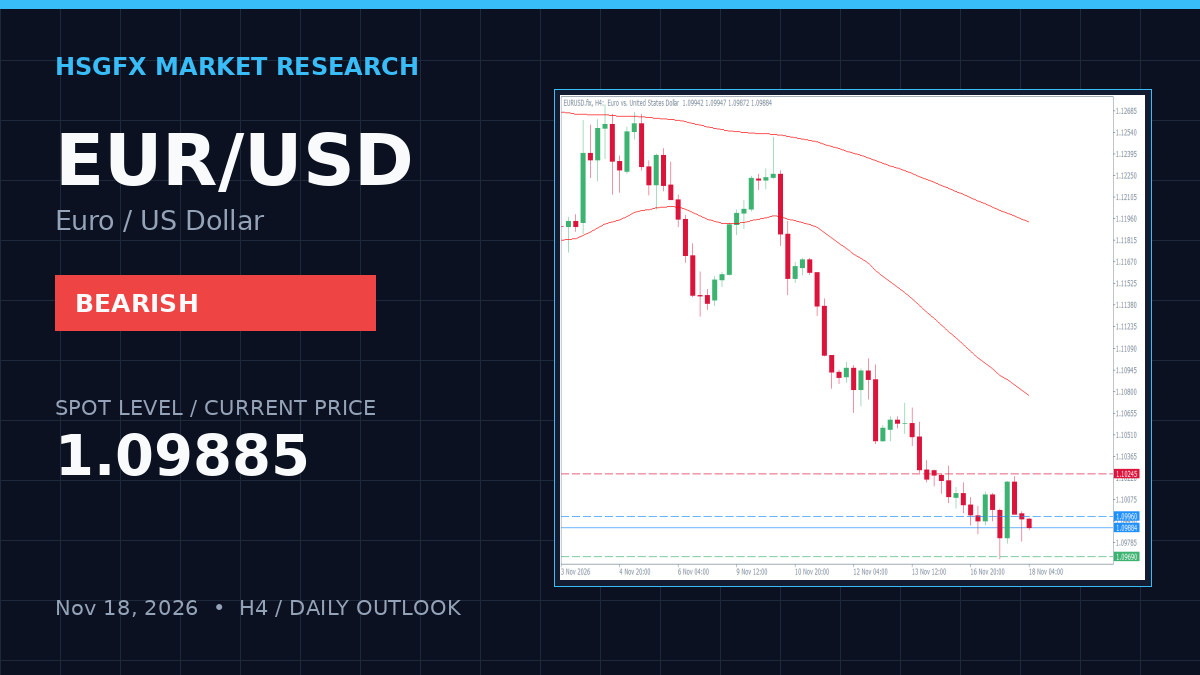
The euro experienced severe downward pressure during Wednesday trading sessions, driving the EUR/USD exchange rate down to a 19-month low. Broad dollar dominance took firm hold across global foreign exchange markets as aggressive macroeconomic drivers aligned to penalize European assets.
Surging US Treasury yields served as the primary catalyst behind the currency pair's notable decline. Benchmark borrowing costs climbed sharply across the curve, widening the interest rate differential between US dollar-denominated assets and their European counterparts.
Expectations surrounding the Federal Reserve's monetary policy trajectory shifted decisively toward a more hawkish stance. Market participants continued to price in an extended period of elevated US interest rates, completely eroding earlier bets on near-term monetary easing from Washington, D.C.
This aggressive repricing of Federal Reserve rate probabilities amplified dollar demand across global financial hubs in New York, London, and Frankfurt. Institutional portfolio managers adjusted currency allocations swiftly to capture higher US fixed-income yields, leaving the single currency exposed to continuous selling pressure.
European session liquidity conditions played a critical role in exacerbating the downside movement. With trading volumes remaining relatively thin across European desks, order book depth was insufficient to absorb the sudden wave of institutional sell orders.
As the exchange rate approached key technical support levels, the lack of robust liquidity amplified downside breakout risks. Automated execution algorithms and stop-loss triggers further accelerated the descent, testing the resolve of euro bulls in spot markets.
Market participants are monitoring whether historical support zones will hold or if a sustained breakdown will trigger accelerated losses. The speed of the depreciation highlights the acute sensitivity of currency valuations to shifting transatlantic yield spreads.
Global forex desks now turn their attention toward upcoming macroeconomic releases from both the United States and the Eurozone. Subsequent inflation prints, labor market reports, and central bank communications will dictate whether the current US dollar supremacy extends further into the fourth quarter.
With global macro sentiment firmly anchored to Federal Reserve policy expectations, risk management protocols remain paramount for institutional traders navigating these volatile currency corridors.
#HoangSonGroup #HSGFX #HSG #HSGSignals #HSGEdu #AffiliateGlobal #PartnerTogether #EURUSD #EURUSDForecast #Forex #USDollar #FederalReserve #TreasuryYields #ECB #DXY #Macroeconomics #CurrencyTrading #MarketUpdate #USTreasuryYields #EuropeanCentralBank #ForexMarket #InterestRates #ForexNews #MacroUpdate #ForexTrading #GlobalMarkets #Economy #FinancialNews #CentralBanks #TradingCommunity #MarketSentiment #FXTrading #CommodityMarkets #EconomicNews