Shopping cart
Your cart empty!

Your cart empty!

Join 10k+ people to get notified about new posts, news and tips.
Do not worry we don't spam!

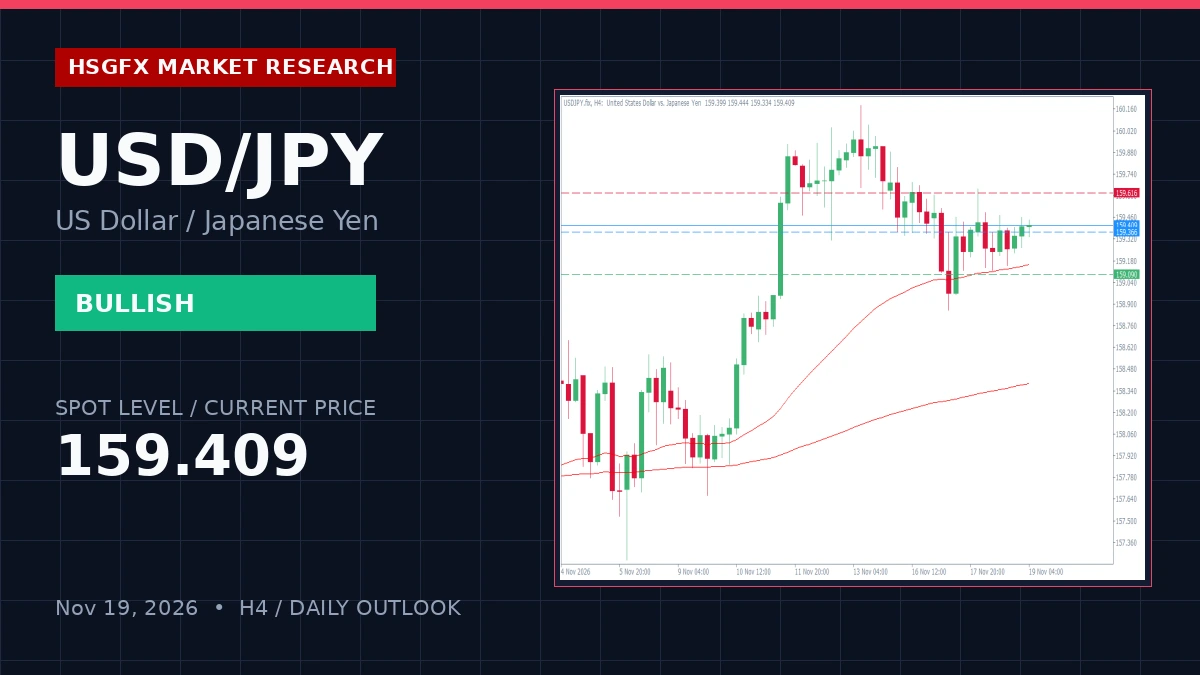
The USD/JPY currency pair is holding firmly in the sights of aggressive market bulls, tracking toward higher trading ranges following a historic rate shock and persistent debates surrounding Bank of Japan monetary policy normalisation. Foreign exchange desks across global financial hubs are re-evaluating cross-pair volatility and traditional carry trade dynamics as the Asian and New York trading sessions unfold.
Market participants are dissecting the broader implications of recent monetary policy adjustments in Tokyo alongside shifting US macroeconomic fundamentals. The interplay between shifting yield differentials and institutional risk appetite continues to dictate aggressive positioning in dollar-denominated assets across global liquidity pools.
The US Dollar Index (DXY) remains a central focal point for currency traders navigating current macroeconomic crosscurrents. Benchmark US Treasury yields continue to fluctuate in response to incoming economic data releases out of Washington and New York, directly influencing the valuation of the greenback against major G10 counterparts.
Institutional demand for the US dollar reflects ongoing adjustments to Federal Reserve rate expectations. Bond market volatility has intensified scrutiny on fixed-income flows, driving sharp capital allocations that ripple directly through spot forex markets and cross-currency swap lines in London and Frankfurt.
At the center of the current JPY trajectory is the ongoing structural debate regarding the Bank of Japan's departure from decades of ultra-loose monetary policy. Recent historic rate decisions and shifting guidance from Japanese monetary officials have dismantled legacy trading assumptions, forcing leveraged funds and institutional accounts to unwind or restructure legacy positions.
While policymakers in Tokyo signal a measured approach to removing accommodation, the sheer speed of macroeconomic adjustments has generated profound cross-pair volatility. Traders are closely monitoring the yield spread between Japanese Government Bonds and US Treasuries, which remains a core fundamental driver for USD/JPY price action.
Global forex desks report heightened trading volumes across major yen crosses as the carry trade undergoes a structural evolution. The narrowing of yield differentials has not entirely eliminated yield-seeking capital flows, but it has dramatically increased sensitivity to sudden shifts in risk sentiment during the Tokyo and London overlaps.
Option markets reflect elevated hedging costs as institutional investors protect portfolios against sudden intraday reversals. This environment rewards disciplined risk management and agile execution across both spot and derivative instruments during high-liquidity windows.
Looking ahead to the remainder of the trading week, forex participants are turning their attention toward upcoming Tier-1 macroeconomic data releases. Scheduled releases covering consumer price inflation, employment metrics, and manufacturing purchasing managers indices will provide crucial clarity on the trajectory of global monetary policy.
As liquidity transitions from the Asian session into the European morning and the heavy New York close, currency traders will weigh incoming fundamental data against prevailing technical structures. Sustained momentum in USD/JPY will depend heavily on whether incoming US data justifies further dollar strength or sparks a renewed round of defensive positioning.
#HoangSonGroup #HSGFX #HSG #HSGSignals #HSGEdu #AffiliateGlobal #PartnerTogether #USDJPY #USDJPYWeeklyOutlook #Forex #USDollar #BankOfJapan #FederalReserve #CarryTrade #TreasuryYields #DXY #MarketUpdate #GlobalForex #FinancialNews #ForexVolatility #MonetaryPolicy #CurrencyPairs #ForexNews #USDCurrency #MacroEconomics #ForexTrading #GlobalMarkets #ForexMarket #CurrencyTrading #CentralBanks #TradingCommunity #MarketSentiment #FXTrading #CommodityMarkets #EconomicNews