Shopping cart
Your cart empty!

Your cart empty!

Join 10k+ people to get notified about new posts, news and tips.
Do not worry we don't spam!
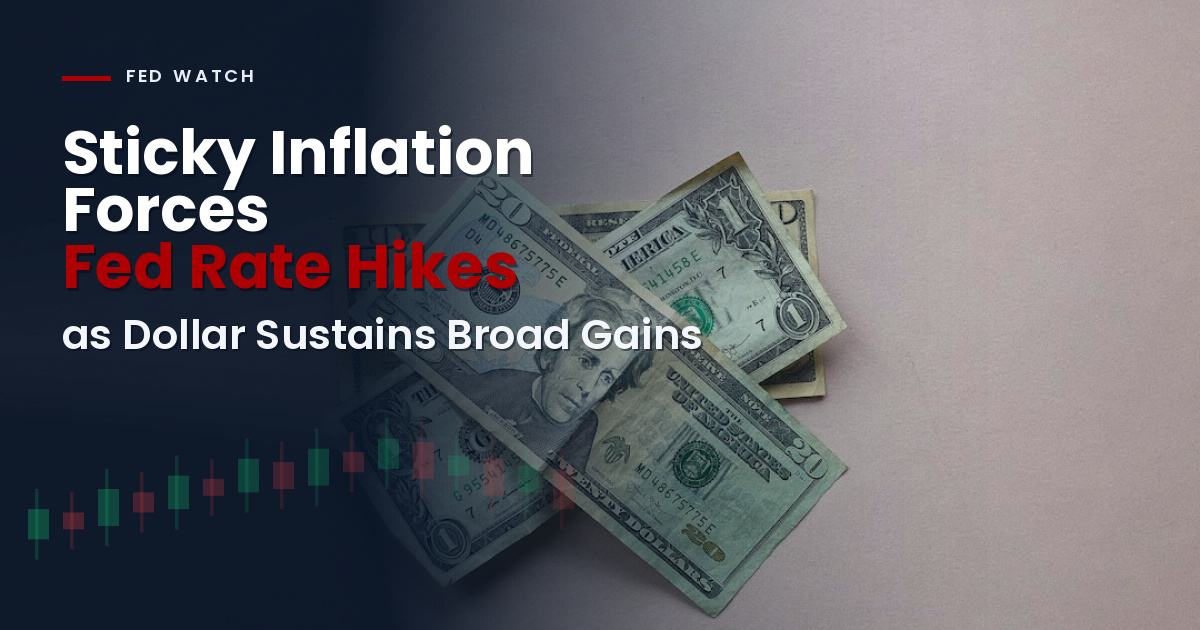
Washington, D.c., HSGFX - The global foreign exchange market experienced a sharp shift in institutional sentiment on Monday, November 23, 2026, as persistent inflationary pressures forced a dramatic reassessment of United States monetary policy. The US Dollar index (DXY) extended its robust rally across major trading sessions, capturing aggressive safe-haven bids from global institutional accounts. Foreign exchange desks in New York and London reported heightened volatility as currency traders absorbed fresh macroeconomic forecasts pointing toward an extended tightening cycle by the Federal Reserve.
At the core of this aggressive currency movement is institutional research from TD Securities, which explicitly highlighted sticky inflation risks as the primary driver behind forthcoming policy decisions. Rather than approaching a dovish pivot, the central bank faces a resilient domestic economy that continues to generate stubborn price pressures. Consequently, market pricing has rapidly evolved to price in consecutive Federal Reserve rate hikes, dismantling earlier expectations of an imminent monetary easing cycle and redefining global yield differentials.
The immediate reaction across major currency pairs underscored the dominance of the greenback. The EUR/USD pair faced renewed downward pressure, breaking below key technical supports as European bond yields failed to keep pace with surging US Treasury yields. Similarly, the GBP/USD pair retreated toward multi-week lows, pressured by a strengthening US Dollar and persistent domestic economic challenges in the United Kingdom. Commodity-linked currencies such as the AUD/USD and USD/CAD also registered pronounced adjustments, reflecting the broader gravitational pull of higher American borrowing costs.
Underpinning the persistent strength in the US Dollar is a synchronized surge in US Treasury yields across the curve. Short-term and intermediate yields climbed steeply as bond markets adjusted to the reality of consecutive rate increases. Institutional portfolio managers rebalanced portfolios to capture higher risk-free yields, simultaneously driving safe-haven capital into US dollar-denominated assets. This dynamic severely limited upside potential for non-yielding assets and alternative currencies alike, establishing a clear macro trend across global capital markets.
In currency derivatives markets, risk reversals heavily favored US Dollar calls against both the Euro and the Japanese Yen. The USD/JPY pair maintained a firm upward bias, testing critical resistance levels as interest rate divergence between the Federal Reserve and the Bank of Japan remained wide. While Japanese monetary authorities continue to monitor currency volatility closely, the fundamental yield gap continues to exert upward pressure on the pair.
This hawkish pivot by the Federal Reserve stands in sharp contrast to the policy deliberations unfolding in other major global jurisdictions. The European Central Bank and the Bank of England face subdued growth metrics that complicate their respective policy paths, leaving them vulnerable to widening interest rate spreads against the United States. As global institutional funds flow toward jurisdictions offering higher real yields, the structural advantage of the US Dollar becomes increasingly pronounced.
Market participants across international trading hubs are now turning their attention toward upcoming Tier-1 macroeconomic data releases to validate the sustainability of this dollar-positive trend. Subsequent readings on consumer price inflation, employment metrics, and Personal Consumption Expenditures (PCE) price indices will play a critical role in confirming whether the Federal Reserve executes consecutive rate hikes in the upcoming policy meetings.
As the trading week progresses, liquidity flows across New York, London, and Asian financial centers will likely remain anchored to shifting rate expectations and bond market volatility. With TD Securities emphasizing the persistence of sticky inflation risks, currency markets are poised for sustained sensitivity to any incoming data that challenges or reinforces the narrative of aggressive central bank tightening.