Shopping cart
Your cart empty!

Your cart empty!

Join 10k+ people to get notified about new posts, news and tips.
Do not worry we don't spam!
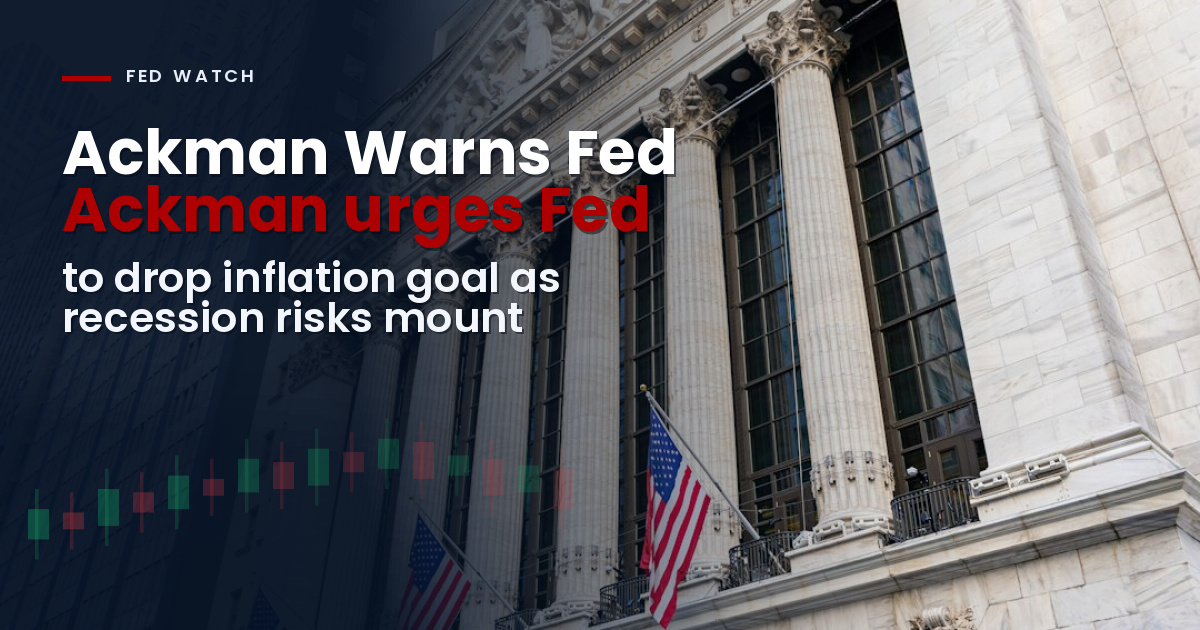
Washington, D.c., HSGFX - Global foreign exchange markets and US Treasury yields are reacting to prominent macroeconomic commentary from Pershing Square Capital Management founder Bill Ackman, who has publicly urged the Federal Reserve to abandon its traditional two percent inflation target in favor of a three percent threshold. Ackman warned that pressing ahead with further monetary tightening, specifically a potential rate hike in December, risks triggering a severe economic recession. This policy debate arrives at a critical juncture for institutional currency traders monitoring the valuation of the US Dollar and broader risk assets.
Foreign exchange desks in New York, London, and Tokyo are closely analyzing how shifting policy expectations could alter the trajectory of the US Dollar Index. A departure from the rigid two percent mandate would fundamentally alter terminal rate pricing across global interest rate swaps. Fixed-income markets are currently re-evaluating US Treasury yield curves as institutional investors weigh the likelihood of structural changes to Federal Open Market Committee frameworks against persistent inflationary pressures.
The debate over the optimal long-term inflation target directly impacts short-term and long-term US Treasury yields. Higher-for-longer interest rate scenarios traditionally support greenback valuations by offering attractive yield differentials against G10 peers like the Euro, British Pound, and Japanese Yen. However, if the Federal Reserve signals any willingness to tolerate a higher inflation band to protect employment and economic growth, nominal and real yields could adjust sharply lower, altering cross-border capital flows.
Currency pairs such as EUR/USD, GBP/USD, and USD/JPY remain highly sensitive to evolving Federal Reserve rhetoric. When prominent market participants challenge the credibility or appropriateness of current central bank frameworks, algorithmic execution models and macro hedge funds often re-position their directional exposure. This dynamic increases intraday volatility across major exchange rates and complicates liquidity management for institutional market makers.
Beyond Washington, central banks across Frankfurt, London, and Tokyo continue to navigate divergent economic cycles. The European Central Bank and the Bank of England are facing their own domestic growth headwinds, making the Federal Reserve's next policy move a primary driver for global FX sentiment. If US monetary authorities are forced to pivot due to recession fears highlighted by market leaders, foreign exchange markets could see a broad-based recalibration of risk sentiment.
Equity indices, commodities, and precious metals are also factoring in the macro commentary regarding December rate decisions. Gold often reacts inversely to real yields and US Dollar strength, meaning any softening of Federal Reserve hawkishness provides fundamental support for bullion. Conversely, persistent monetary tightening in the face of cooling economic data raises the specter of policy overextension.
Looking ahead, global macro traders are pivoting their attention toward upcoming Tier-1 economic releases, including upcoming Consumer Price Index reports, Personal Consumption Expenditures data, and monthly Non-Farm Payrolls figures. These upcoming data prints will serve as empirical validation for whether the US economy requires additional monetary restriction or if the warnings regarding an impending recession hold statistical merit.
As the December Federal Open Market Committee meeting approaches, market participants will scrutinize every public statement from Federal Reserve officials for signs of flexibility regarding the inflation target. Institutional desks in international financial hubs remain prepared for heightened volatility across currency pairs, debt instruments, and commodity complexes as the debate over the future of US monetary policy intensifies.