Shopping cart
Your cart empty!

Your cart empty!

Join 10k+ people to get notified about new posts, news and tips.
Do not worry we don't spam!
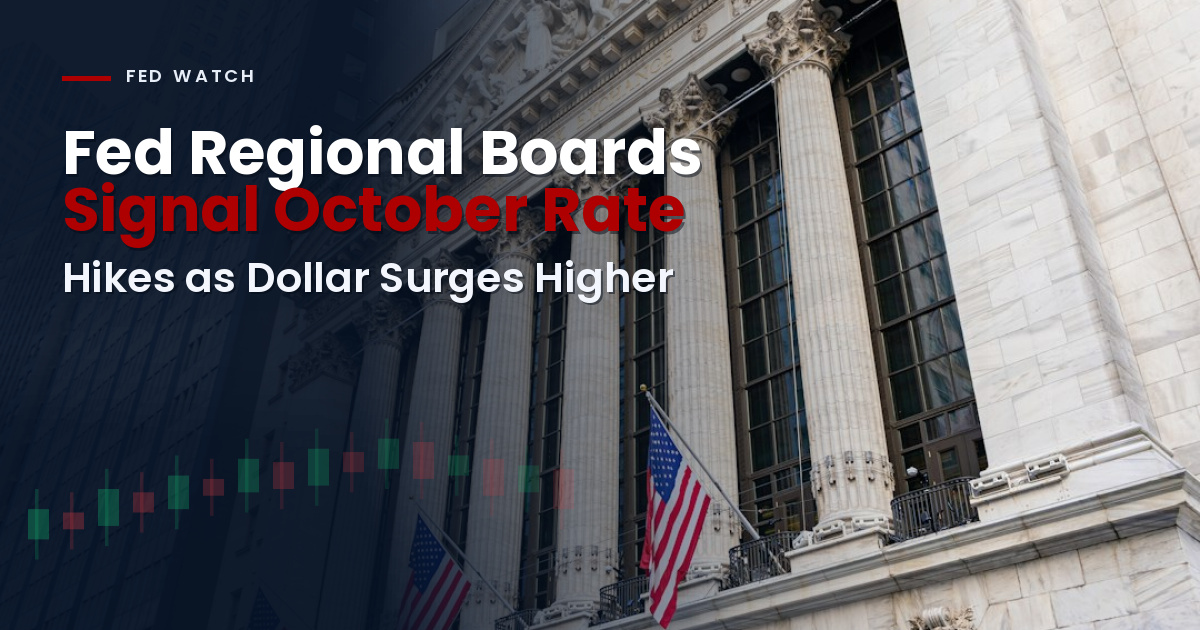
Washington, D.c., HSGFX - The US Dollar surged aggressively across global currency markets alongside a sharp repricing of US Treasury yields following revelations that a majority of Federal Reserve regional boards voted to raise interest rates during October. This unexpected hawkish pressure has disrupted broader market easing bets, intensifying divergence across major currency pairs and triggering a strong wave of safe-haven demand in New York and global trading hubs.
Foreign exchange desks in London and Frankfurt immediately adjusted positioning as the revelation filtered through institutional channels. The US Dollar Index (DXY) extended intraday gains, putting severe downward pressure on rival G10 currencies including the Euro and the British Pound. Meanwhile, safe-haven flows intensified across international markets as participants weighed the persistence of domestic inflationary pressures against softening global economic indicators.
Underlying Treasury yield curves steepened significantly as fixed-income traders digested the internal hawkish dissent within the central bank structure. Short-term and intermediate yields climbed as market participants pared back aggressive policy easing timelines previously priced into federal funds futures. This upward shift in sovereign borrowing costs provided an immediate yield advantage for greenback-denominated assets.
The disclosure that regional Federal Reserve banks favored restrictive monetary action highlights a persistent internal divide regarding the pace and necessity of policy relaxation. While global financial centers had increasingly anticipated a synchronized cycle of central bank rate cuts, the institutional reality reflected in the regional board votes demonstrates ongoing concern over sticky price stability.
This hawkish undercurrent contrasts sharply with the policy trajectories anticipated for other major international central banks. The European Central Bank and the Bank of England continue to grapple with sluggish regional growth metrics, leaving open the probability of more dovish policy adjustments. Consequently, interest rate differentials continue to widen, acting as a primary structural driver for currency market flows.
Major currency pairs experienced heightened intraday volatility as the macro landscape shifted. EUR/USD tested key technical support levels as the widening transatlantic yield spread favored the US currency. Similarly, USD/JPY tracked the upward movement in US sovereign yields, testing the resolve of Japanese monetary authorities monitoring foreign exchange stability in Tokyo.
Precious metals faced immediate headwinds as the surge in real yields and the stronger US Dollar increased the opportunity cost of holding non-yielding bullion. Gold and silver prices retreated from recent consolidation ranges as institutional capital reallocated toward high-yielding sovereign debt instruments.
Energy and industrial commodity markets also absorbed the macro shock, pricing in the potential dampening effect of persistently higher borrowing costs on global industrial demand. However, downside momentum in commodities was partially cushioned by sustained geopolitical risk premiums circulating through international trading desks.
Market participants are now turning their attention toward upcoming domestic economic releases, including employment reports, consumer price inflation metrics, and core PCE data. These upcoming indicators will serve as critical litmus tests to determine whether the Federal Reserve Board will ultimately lean toward the hawkish posture demonstrated by its regional boards or maintain a more flexible easing bias in subsequent policy meetings.