Shopping cart
Your cart empty!

Your cart empty!

Join 10k+ people to get notified about new posts, news and tips.
Do not worry we don't spam!
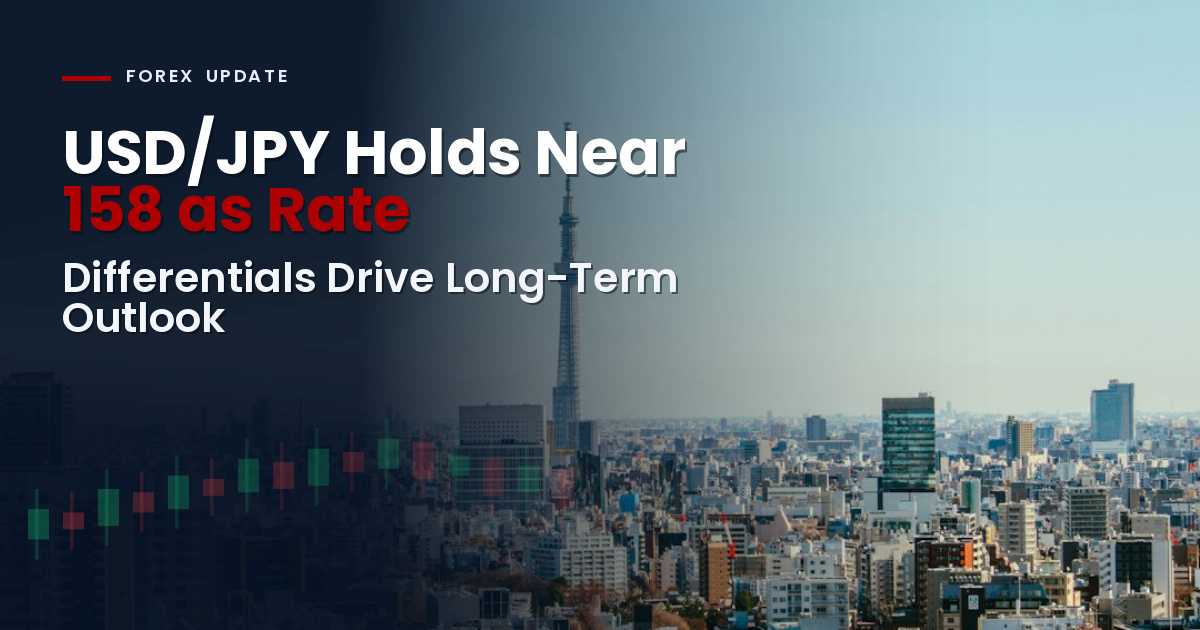
Tokyo, HSGFX - UBS has projected that the USD/JPY exchange rate will hold firm near the 158 level through 2027, underpinned by persistent interest rate differentials between the United States and Japan. This institutional outlook highlights the enduring strength of yield-driven capital flows across major global session trading desks.
Foreign exchange markets continue to process the structural divergence between monetary policy paths in Washington and Tokyo. While global macroeconomic shifts challenge various currency pairs, the Japanese Yen remains tethered to ultra-loose domestic financial conditions.
The broader US Dollar (DXY) index reflects ongoing sensitivity to US Treasury yield dynamics, keeping the greenback supported against several G10 counterparts. Yield spreads between US sovereign debt and Japanese Government Bonds remain exceptionally wide, discouraging repatriation flows into the Yen.
Carry trade strategies retain significant appeal for institutional participants navigating the Asian and New York trading sessions. Borrowing in low-yielding Yen to fund higher-yielding dollar-denominated assets continues to shape volume across major electronic matching engines.
Central bank policy divergence sits at the core of this multi-year forecast. The Federal Reserve maintains a cautious stance on monetary easing relative to historical pivots, whereas the Bank of Japan proceeds with extreme caution in normalizing its accommodative framework.
Fixed income markets across Tokyo and New York are closely monitoring how term premia evolve over the coming quarters. Sustained US fiscal issuance and resilient economic data continue to anchor US yields at levels that disadvantage low-beta funding currencies.
Asian session traders are paying strict attention to intervention risks and verbal warnings from Japanese fiscal authorities. Past volatility near psychological barriers has heightened sensitivity to rapid currency depreciation, though structural yield fundamentals continue to overpower intervention threats.
London and New York institutional desks are adjusting portfolios to account for extended carry trade sustainability. Portfolio managers utilize cross-currency swaps and short-term options to hedge against sudden policy surprises while capturing ongoing interest rate differentials.
Looking ahead, upcoming macro catalysts including US consumer price inflation readings, non-farm payroll reports, and quarterly central bank projections will dictate whether yield spreads widen or compress further. Global forex participants remain vigilant as macroeconomic data prints validate or challenge the baseline trajectory for USD/JPY.