Shopping cart
Your cart empty!

Your cart empty!

Join 10k+ people to get notified about new posts, news and tips.
Do not worry we don't spam!
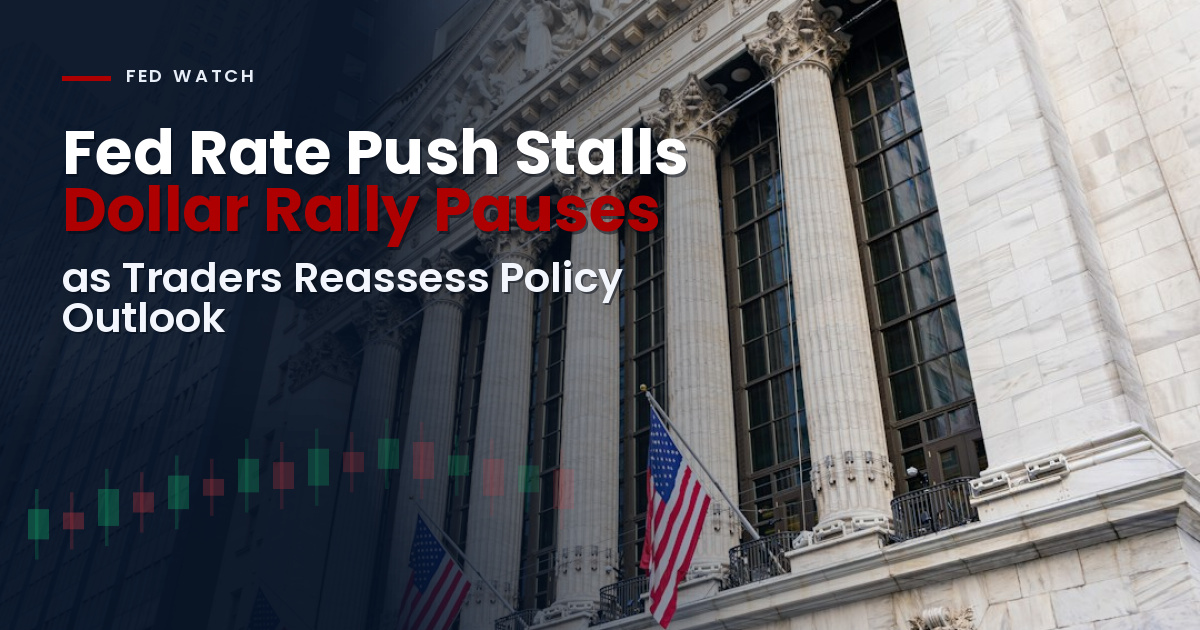
Washington, D.c., HSGFX - Federal Reserve officials continue advocating for higher interest rates across global financial hubs, yet the US Dollar rally has unexpectedly stalled near multi-month highs. This divergence between aggressive policy messaging and fading Greenback momentum is reshaping trading dynamics across major currency pairs including EUR/USD, GBP/USD, and USD/JPY.
Foreign exchange desks in New York and London report that currency traders are increasingly questioning the marginal impact of further hawkish rhetoric. Even with central bank speakers emphasizing the necessity of maintaining restrictive monetary conditions to combat sticky inflation, the US Dollar index (DXY) has found it difficult to punch through established technical resistance zones.
The disconnect between persistent policy tightening advocacy and the lack of upside follow-through in the Greenback highlights a shifting macroeconomic calculus. Institutional investors are factoring in the possibility that the Federal Reserve has reached the terminal phase of its tightening cycle, rendering additional verbal warnings less potent in driving spot currency valuations higher.
Across G10 FX markets, major counterparts like the Euro and the British Pound have shown resilience despite ongoing yield differentials. European Central Bank and Bank of England officials are navigating their own persistent inflation challenges, which has helped support local currencies against stagnant dollar inflows.
Treasury yield behavior further complicates the current macroeconomic narrative. While sovereign debt yields remain elevated in response to the central bank's higher-for-longer outlook, the traditional positive correlation with the US Dollar has shown noticeable signs of decoupling during recent New York and Asian trading sessions.
Commodity markets, including gold and energy assets, are closely monitoring this currency consolidation. A stalling dollar rally typically provides breathing room for dollar-denominated commodities, dampening downward pressure on precious metals while traders recalibrate their portfolio exposures.
Asian session participants have noted quieter turnover in USD/JPY as market participants weigh potential intervention risks alongside narrowing yield spreads. Meanwhile, European desks observe that corporate hedging flows are adapting to a potentially plateauing Greenback rather than chasing extended multi-month highs.
Market participants across Washington, Frankfurt, and Tokyo are now turning their attention toward upcoming macroeconomic data releases. Upcoming Consumer Price Index (CPI) prints, Non-Farm Payrolls (NFP), and Personal Consumption Expenditures (PCE) reports will serve as critical litmus tests for whether the Federal Reserve's hawkish stance is supported by hard economic data.
Until these key indicators are published, foreign exchange volatility is expected to remain contained within established ranges. Traders are maintaining a flexible stance, balancing the stated intentions of central bankers against the observable price action unfolding across global liquidity pools.