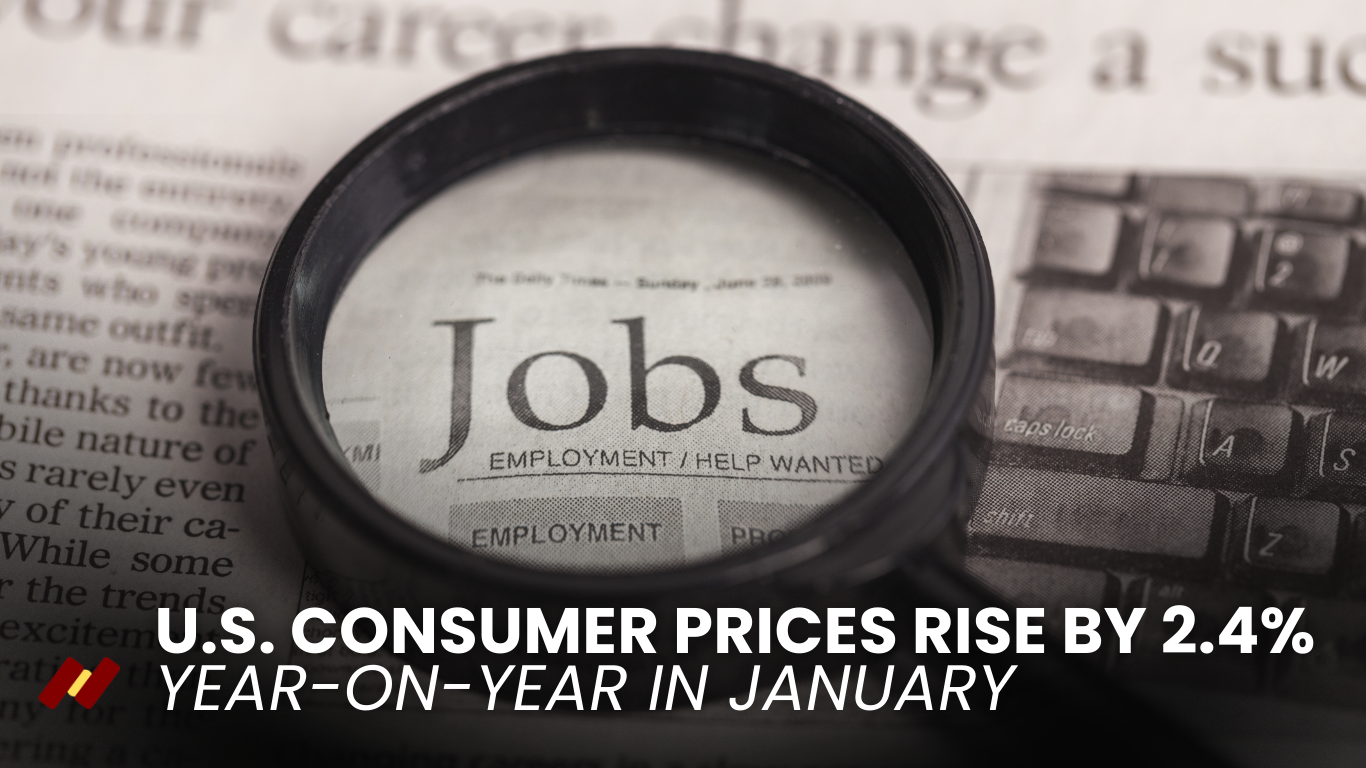
U.S. consumer price gains slowed by more than anticipated in January, decelerating closer to the Federal Reserve’s 2% target level, thanks in part to a fall in energy prices.Headline U.S. consumer prices rose by 2.4% in the twelve months to January, compared to estimates of 2.5% and December’s pace of 2.7%. On a monthly basis, the Labor Department’s consumer price index -- a key gauge of U.S. inflation -- increased by 0.2%, versus economists’ expectations that it would match December’s rate of 0.3%. An uptick in shelter and food costs accounted for much of the monthly increase, but were partially offset by a drop in energy prices, the Labor Department’s Bureau of Labor Statistics said. Stripping out volatile items like food and fuel, so-called "core" CPI rose 2.5% year-on-year and 0.3% month-on-month, in line with forecasts, as higher prices for services like air travel and medical care were tempered by lower costs of used cars and trucks, household furnishings, and motor vehicle insurance.
Prev Article
Markets Retreat Amid Inflation Anxiety and Bond Bubble Fears
Next Article
Happy Lunar New Year 2026