Shopping cart
Your cart empty!

Your cart empty!

Join 10k+ people to get notified about new posts, news and tips.
Do not worry we don't spam!
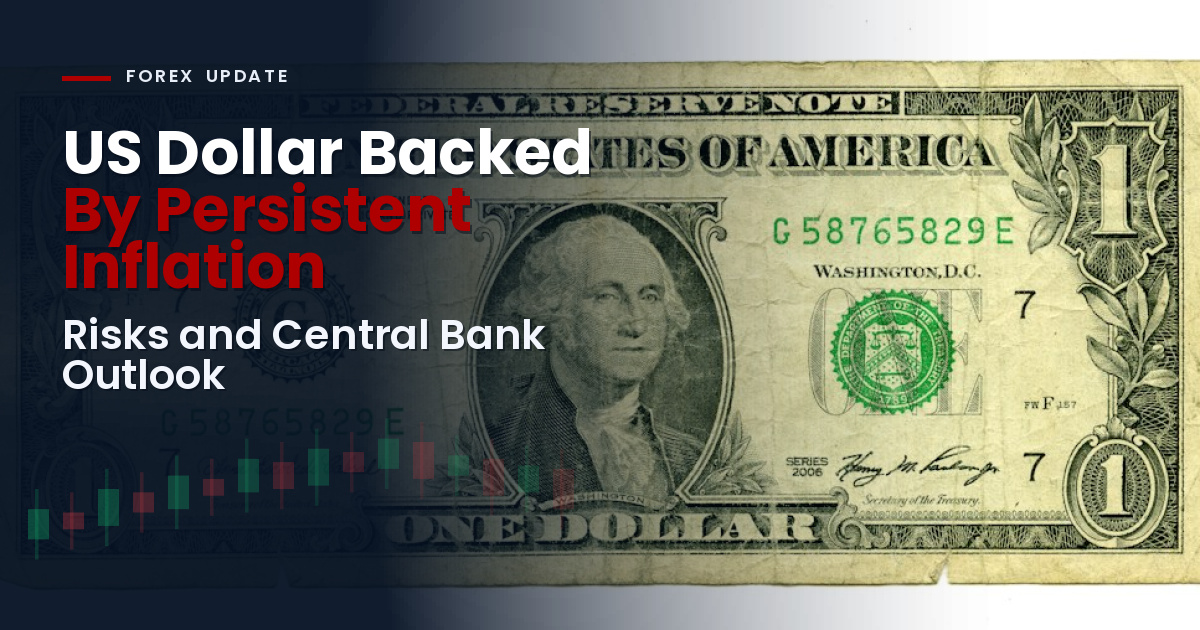
Washington, D.c., HSGFX - The US Dollar continues to exhibit robust resilience across global foreign exchange markets, underpinned by persistent inflation risks that have fundamentally altered near-term monetary policy expectations. Recent analysis from United Overseas Bank (UOB) highlights how stubborn domestic price pressures prevent the greenback from sustaining deeper downward corrections against major trading partners. Global currency desks in New York and London report sustained defensive buying of the US currency as macroeconomic indicators refuse to align with aggressive central bank easing timelines.
Foreign exchange traders are actively reassessing directional biases for major currency pairs such as EUR/USD, GBP/USD, and USD/JPY in response to these evolving yield differentials. Persistent inflation risks reinforce the perception that borrowing costs will remain restrictive for an extended duration. This macroeconomic backdrop directly challenges earlier market sentiment that anticipated rapid monetary policy normalization by the Federal Reserve and other major international central banks.
The broader US Dollar Index (DXY) maintains a firm footing near recent session highs as United States Treasury yields reflect ongoing market adjustments to sticky inflation metrics. Fixed-income investors continue to demand higher term premiums, keeping sovereign debt yields elevated and providing a reliable structural floor for the greenback. Global macro funds are adjusting their positioning to account for a scenario where inflation proves significantly more entrenched than consensus estimates previously suggested.
Currency strategists monitoring international capital flows note that persistent US price pressures continue to attract cross-border yield-seeking capital. As foreign exchange markets digest incoming economic data, the relative attractiveness of US dollar-denominated assets remains intact. This dynamic limits downside participation for the currency, even during periods of broader risk appetite across global equity indices and emerging market currencies.
The interplay between the Federal Reserve and peer institutions like the European Central Bank, the Bank of England, and the Bank of Japan defines current institutional FX trading strategies. While global central banks face unique domestic economic headwinds, persistent US inflation forces a cautious policy stance that diverges from expectations elsewhere. This policy divergence acts as a primary catalyst driving spot currency valuations in the G10 space.
Market participants across Frankfurt and Tokyo are closely monitoring how sticky US inflation influences imported price pressures globally. Currency desks emphasize that the persistence of domestic US inflation alters cross-border trade balances and capital allocation strategies. Consequently, institutional positioning in the options market increasingly favors defensive structures that protect against unexpected USD appreciation.
Looking ahead, global forex participants are turning their attention to upcoming top-tier macroeconomic releases, including upcoming Consumer Price Index (CPI) reports, Personal Consumption Expenditures (PCE) price indices, and comprehensive labor market data. These forthcoming metrics will serve as critical benchmarks for verifying whether inflation pressures are genuinely moderating or remaining embedded within the broader economic structure.
As the currency market navigates this complex macroeconomic environment, liquidity remains concentrated around key technical support and resistance levels across major currency pairs. Institutional analysts will continue evaluating incoming UOB commentary and central bank communications to gauge the longevity of the current greenback support cycle. Sustainable directional moves will ultimately depend on incoming hard data confirming the trajectory of global price stability.