Shopping cart
Your cart empty!

Your cart empty!

Join 10k+ people to get notified about new posts, news and tips.
Do not worry we don't spam!
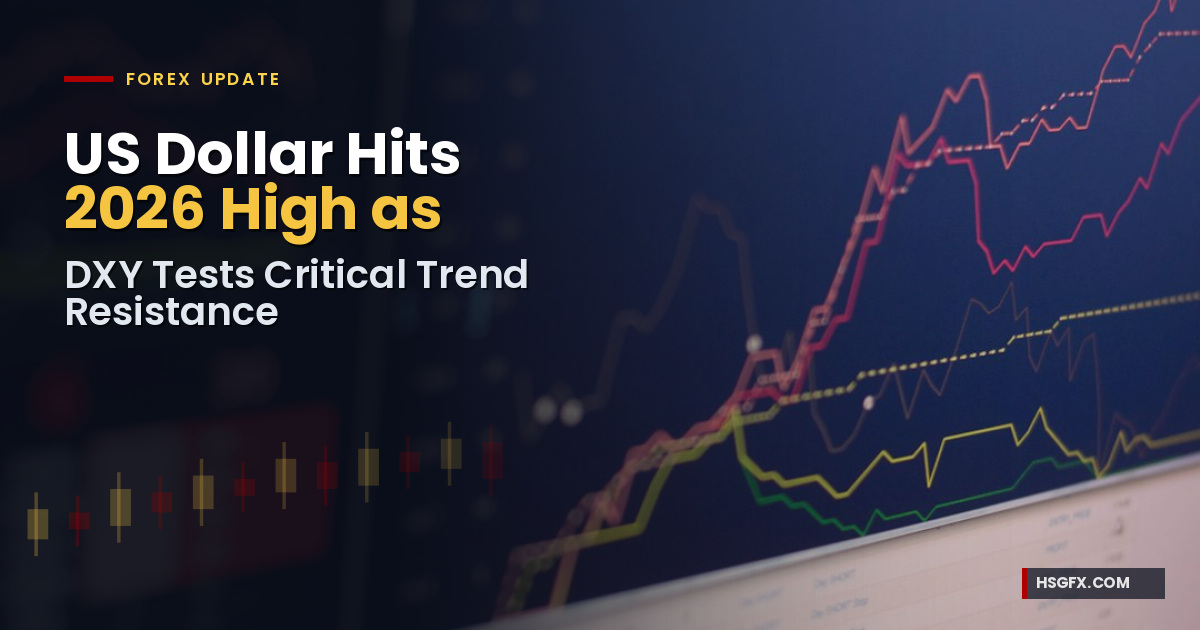
New York, HSGFX - The global foreign exchange market is experiencing intense volatility as the US Dollar Index surges to a fresh 2026 high. Institutional desks are closely monitoring whether sustained buying momentum can effectively shatter stubborn trend resistance or ultimately provoke a sharp macroeconomic reversal across major pairs.
Major currency pairs including EUR/USD, GBP/USD, and USD/JPY have experienced accelerated selling pressure alongside the broader greenback advance. Macroeconomic strategists are weighing whether aggressive central bank policy divergence or surging Treasury yields will dictate the next major directional phase for global currencies.
The explosive surge in the US Dollar Index has directly translated into pronounced downward pressure across primary G10 exchange rates. The EUR/USD pair has plummeted toward key psychological support levels as persistent economic stagnation across the eurozone contrasts sharply with resilient domestic demand in the United States. Currency traders are actively reassessing risk parameters as cross-border capital flows rapidly reallocate toward dollar-denominated assets.
Simultaneously, the GBP/USD pair has surrendered vital technical territory amid shifting expectations surrounding the Bank of England's monetary easing path. Market participants note that sterling weakness has accelerated following weaker-than-expected domestic retail sales data and cooling inflationary readings across the United Kingdom. This compounding pressure leaves cable highly vulnerable to broader structural dollar strength throughout the active trading sessions.
In Asian and early London trade, USD/JPY has maintained an assertive upward trajectory while remaining tethered to persistent monetary policy divergence. Despite ongoing verbal intervention threats from Japanese financial authorities, the wide interest rate differential continues to incentivize carry trade positioning. Consequently, the Japanese yen struggles to establish meaningful footing against an unrelenting greenback.
The fundamental catalyst underpinning the latest dollar surge stems from a powerful repricing of US Treasury yields across the curve. Benchmark ten-year yields have climbed steadily higher as robust labor market indicators and sticky consumer price inflation force a reassessment of the Federal Reserve's terminal rate trajectory. Fixed-income institutional flows are aggressively favoring shorter-duration dollar assets, providing sustained underlying momentum for the broader DXY index.
Real yields have expanded significantly over recent sessions, reinforcing the attractiveness of dollar-denominated debt instruments for international institutional portfolios. This yield advantage acts as a primary magnet for foreign capital, directly starving competing major currencies of sustained liquidity inflows. Macroeconomic models indicate that until domestic inflation metrics show a decisive downward break, Treasury yield resilience will likely keep the greenback firmly supported.
Furthermore, recent comments from Federal Reserve officials emphasizing a patient approach toward monetary easing have dashed aggressive rate-cut speculations. Markets have successfully pared back expectations for rapid policy normalization, leaving the door open for higher-for-longer interest rates. This hawkish recalibration has provided the fundamental fuel required for the DXY to probe multi-month technical resistance ceilings.
Global monetary policy divergence remains the overarching macroeconomic theme shaping foreign exchange markets as the final month of the year approaches. While the Federal Reserve maintains a cautious, data-dependent stance rooted in persistent economic resilience, peer institutions like the European Central Bank and the Reserve Bank of Australia face mounting pressure to accelerate easing. This widening policy gap heavily skews institutional sentiment in favor of the US currency across almost all G10 liquidity channels.
In Frankfurt, policymakers confront mounting evidence of an anemic regional economic recovery, which strengthens the probability of more aggressive policy accommodation by the ECB. This widening monetary policy spread creates a natural ceiling for the shared currency, frequently turning intraday rallies into selling opportunities for macro funds. Similar divergences are visible in the Antipodean currencies, where softer employment indicators in Australia weigh heavily on the AUD/USD pair.
Institutional sentiment indicators reflect a distinct polarization among global asset managers regarding the sustainability of the current dollar rally. While quantitative momentum models point toward continued upside if technical resistance breaks decisively, fundamental macro funds urge caution given stretched valuations. The coming sessions will test the resolve of trend-following desks as the DXY interacts with multi-year structural resistance levels.
Looking ahead, the trajectory of the foreign exchange market hinges critically on an upcoming barrage of high-impact macroeconomic releases. Scheduled prints for the United States Non-Farm Payrolls, consumer price index revisions, and core PCE inflation figures will serve as ultimate arbiters for Federal Reserve policy. Any notable downside surprise in these critical metrics could abruptly trigger a sharp technical correction across major dollar pairs.
From a technical perspective, the DXY is currently navigating a heavily congested zone defined by significant multi-year moving averages and historical swing highs. Institutional chartists emphasize that a confirmed weekly close above this resistance barrier would open the door for an extended bullish continuation phase well into the upcoming year. Conversely, a failure to breach this technical ceiling could spark a rapid unwinding of speculative long positions.
Risk management desks across major financial institutions are advising heightened vigilance as liquidity conditions fluctuate ahead of major holiday periods. Volatility measures across currency options markets are ticking higher, reflecting growing anxiety over potential breakout failures. As the market digests these crucial technical tests, disciplined position sizing and strict risk parameters remain paramount for institutional market participants.