Shopping cart
Your cart empty!
Your cart empty!

Join 10k+ people to get notified about new posts, news and tips.
Do not worry we don't spam!
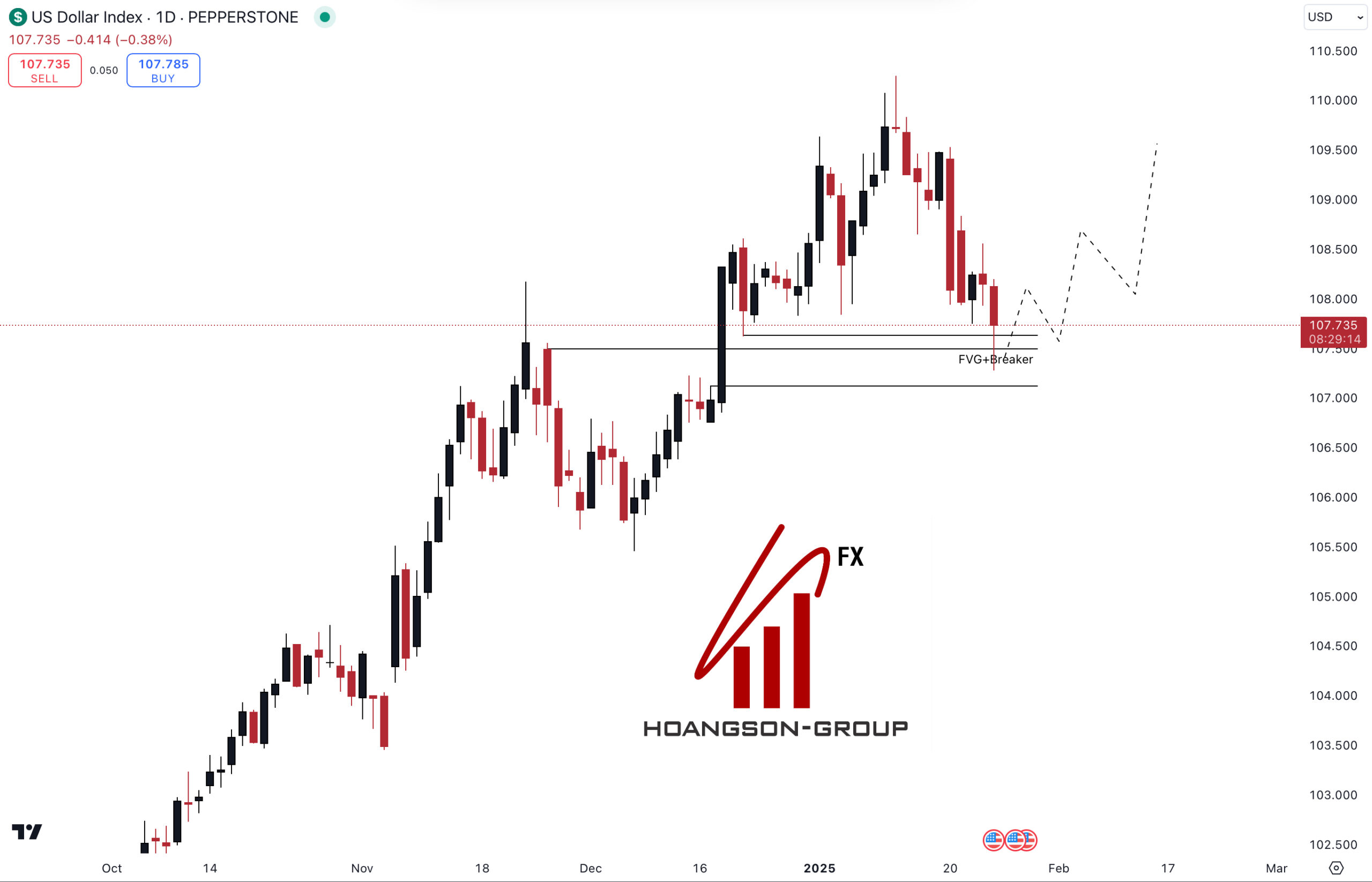 The US Dollar Index (DXY) continues to face downward pressure alongside US Treasury yields. While Trump’s softened stance on tariffs has eased immediate market fears, uncertainty remains over potential future trade policies. Analysts warn that should tariffs be imposed later, the dollar could regain strength.
For a recovery, the DXY must first reclaim the key psychological level of 108.00. Further resistance levels are noted at 109.29, a significant high from July 2022, and 110.79, a peak from September 2022. However, unless sentiment shifts, the US Dollar may struggle to reverse its current downward trajectory.
The US Dollar Index (DXY) continues to face downward pressure alongside US Treasury yields. While Trump’s softened stance on tariffs has eased immediate market fears, uncertainty remains over potential future trade policies. Analysts warn that should tariffs be imposed later, the dollar could regain strength.
For a recovery, the DXY must first reclaim the key psychological level of 108.00. Further resistance levels are noted at 109.29, a significant high from July 2022, and 110.79, a peak from September 2022. However, unless sentiment shifts, the US Dollar may struggle to reverse its current downward trajectory.


Lorem Ipsum is simply dummy text of the printing and typesetting industry. Lorem Ipsum has been the industry's standard dummy text ever since the 1500s






Leave a Comment
You must be logged in to post a comment.