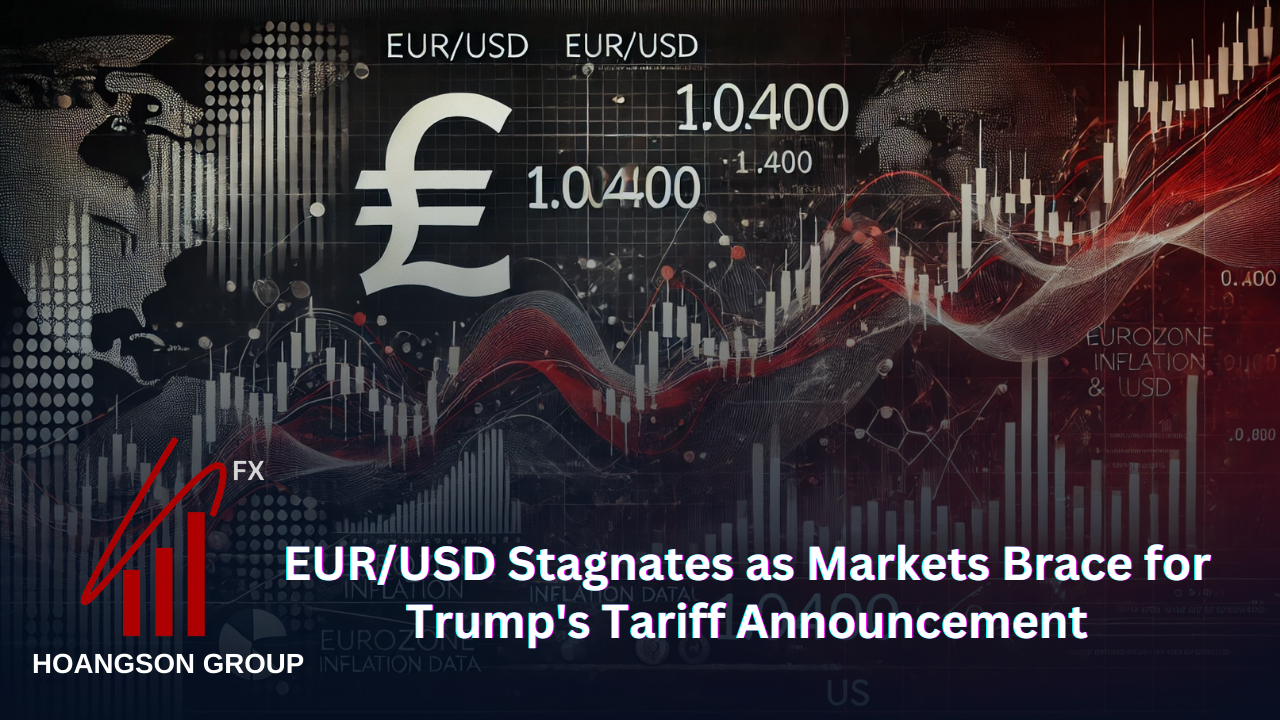
March 31, 2025 — The EUR/USD currency pair remains largely unchanged around 1.0830 during Monday’s European trading session as investors await an anticipated reciprocal tariff announcement from U.S. President Donald Trump. The U.S. dollar continues its downward trend for the third consecutive session, with the Dollar Index (DXY) hitting a ten-day low of 103.75.
Financial markets are wary that
Trump’s proposed tariff measures could dampen economic growth and trigger
inflationary pressures worldwide. According to a report by
The Washington Post, the president has been pushing for
stricter trade policies, including the reintroduction of a
universal tariff applicable to most imports, irrespective of their country of origin.
Trump has also reportedly expressed regret over not implementing broader tariffs during his first term, emphasizing that increased import duties could boost
domestic manufacturing and generate
substantial government revenue.

Economic Data and Fed Outlook in Focus
This week, market participants are closely monitoring key
U.S. economic indicators, including the
ISM Manufacturing and Services PMI and
labor market data, which could influence the
Federal Reserve’s (Fed) monetary policy decisions.
According to the
CME FedWatch tool, the
Federal Reserve is expected to maintain its
current interest rate levels at its
May policy meeting. However, the probability of a
rate cut in June has increased to
83.5%, up from
65.6% recorded a week ago, reflecting
growing concerns about economic conditions.
Impact of German Inflation and Potential Eurozone Tariffs
In Europe, attention is on
Germany’s preliminary Harmonized Index of Consumer Prices (HICP) data for March, set for release at
12:00 GMT. Analysts expect a
2.4% year-over-year increase, slightly lower than February’s
2.6% rise. Inflation data from
France and Spain last week indicated
slower-than-expected price growth.
Market analysts believe that
Germany’s inflation figures will have a
limited impact on the
European Central Bank’s (ECB) monetary policy outlook. Instead, traders are bracing for
potential economic repercussions from
Trump’s tariff agenda. The
U.S. president has criticized the
European Union (EU) for
insufficient purchases of American goods, raising speculation about
new tariffs targeting the Eurozone. In
2024,
Ireland and Germany ranked among the
top five nations with the
highest trade surpluses with the U.S., according to the
World Population Review.
A
new wave of U.S. tariffs on the
Eurozone could weigh heavily on
economic growth.
ECB President Christine Lagarde warned that an escalating
trade conflict could reduce
Eurozone growth by at least
0.3%.
Escalating Trade Tensions Between U.S. and EU
Last week,
Trump imposed a 25% tariff on
foreign car and light truck imports, set to take effect on
Wednesday. In response, the
European Commission initially warned of
retaliatory measures but later agreed to
concessions to mitigate
tariff escalation, according to a
Bloomberg report. However, concerns remain that further
trade restrictions could heighten
tensions between the U.S. and EU, potentially leading to
broader economic disruptions.
Leave a Comment
You must be logged in to post a comment.